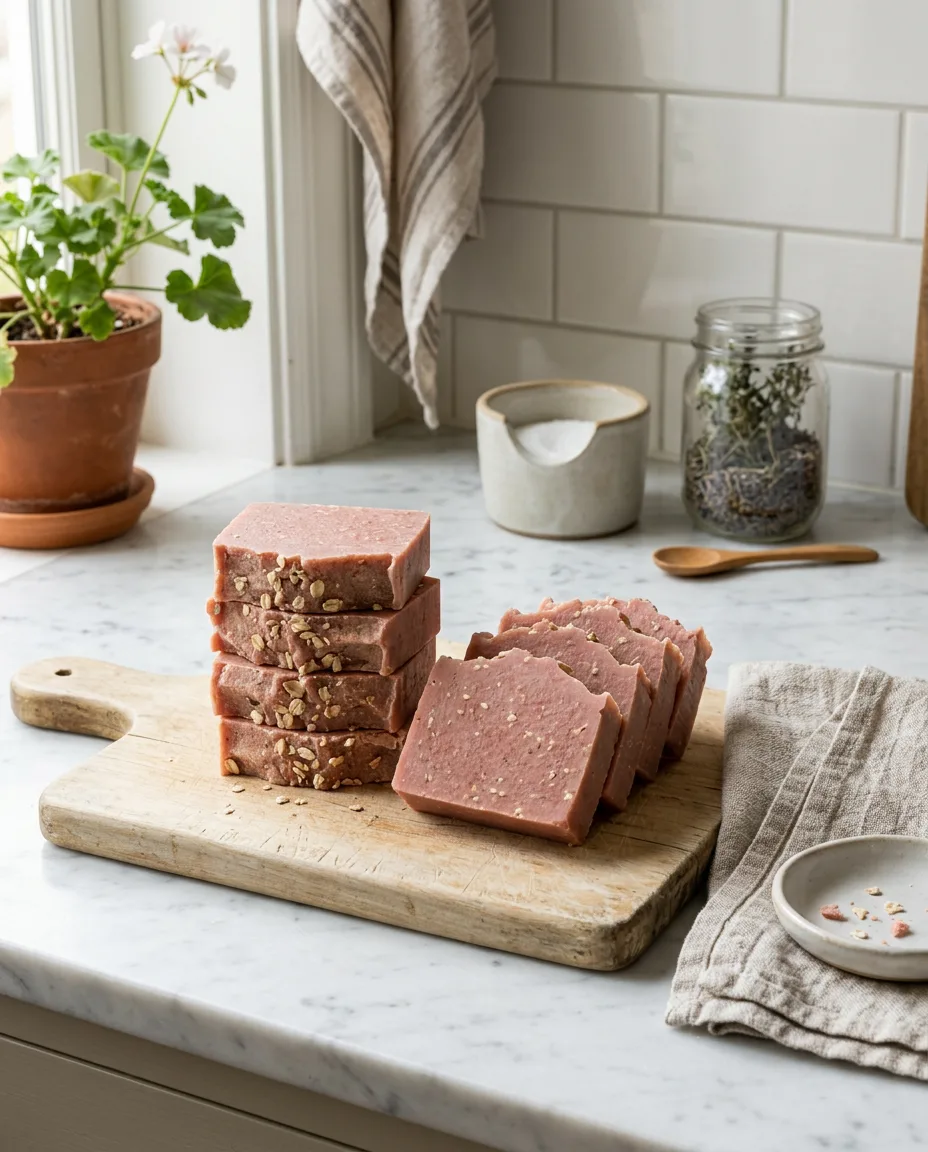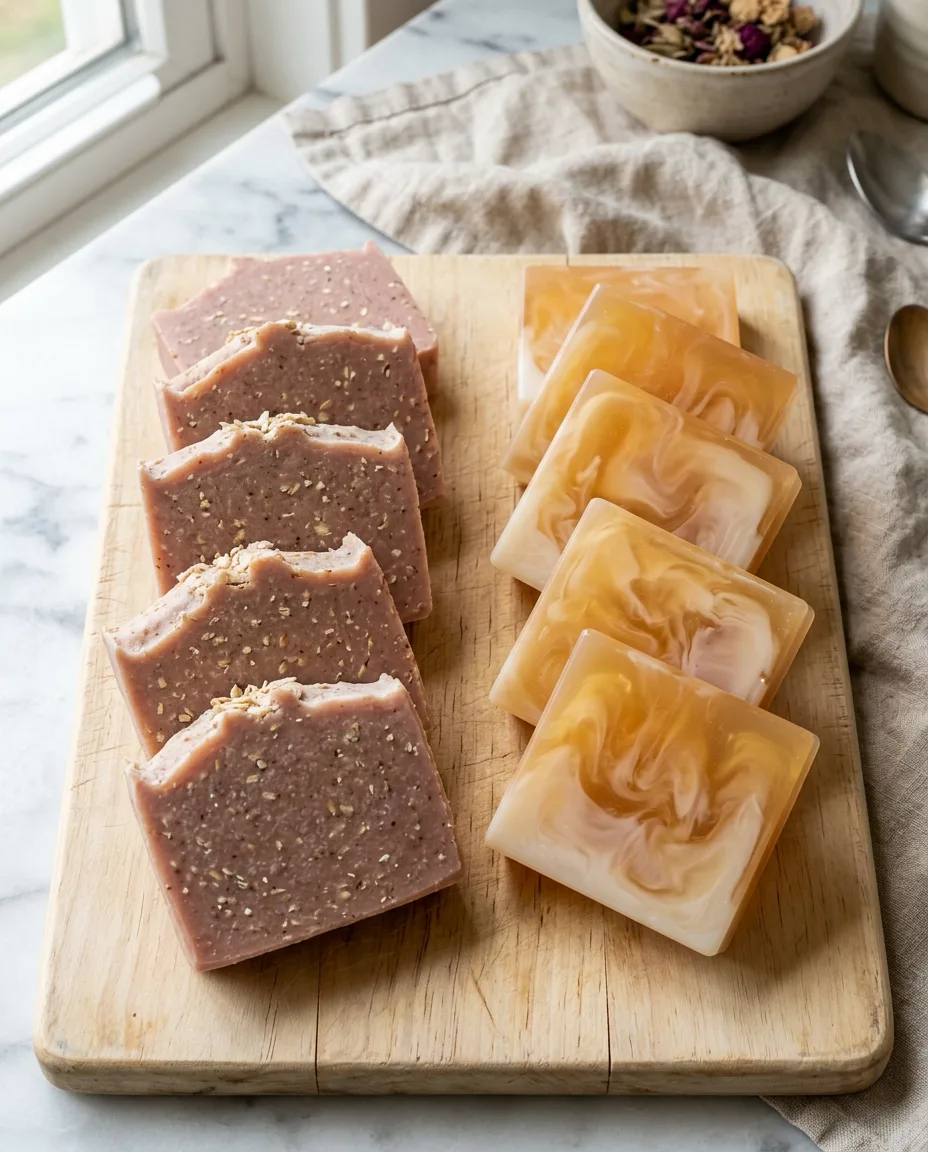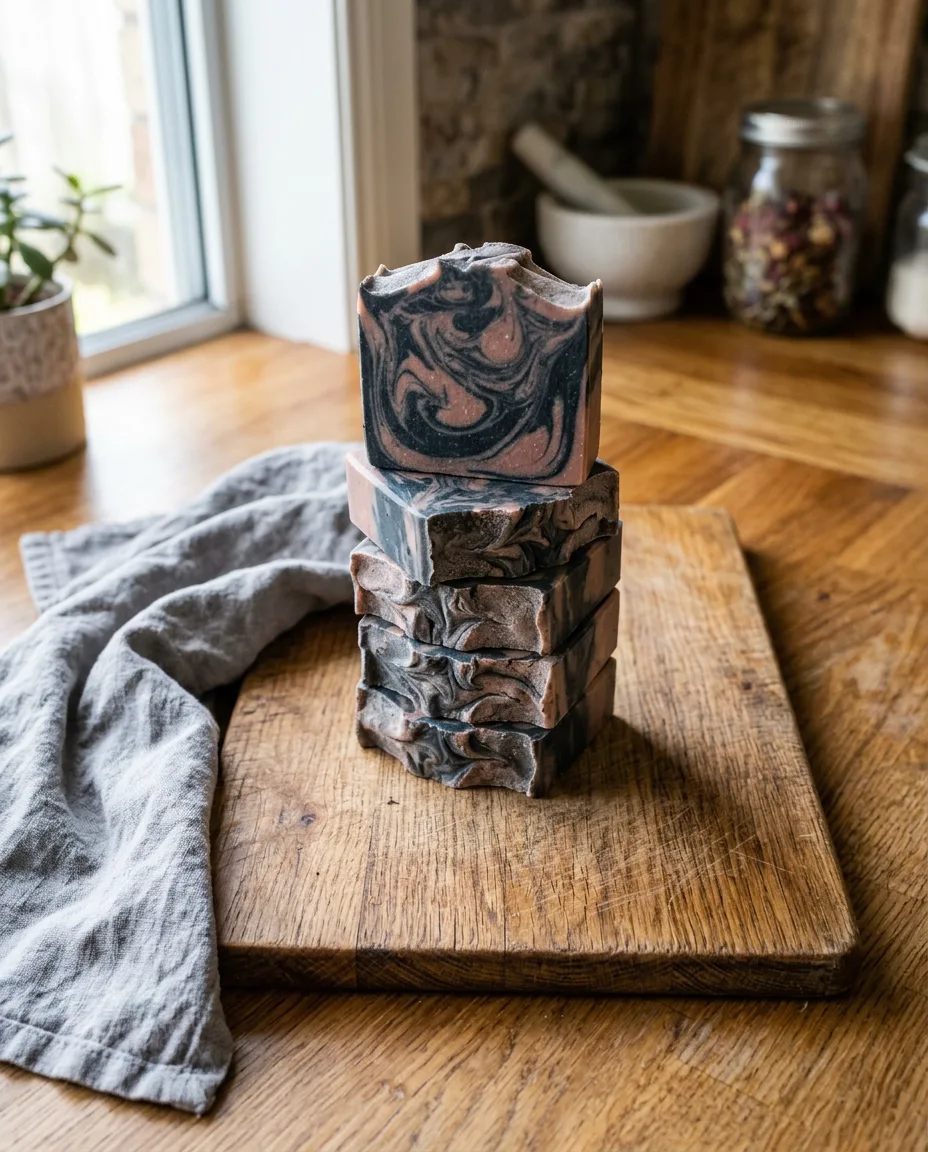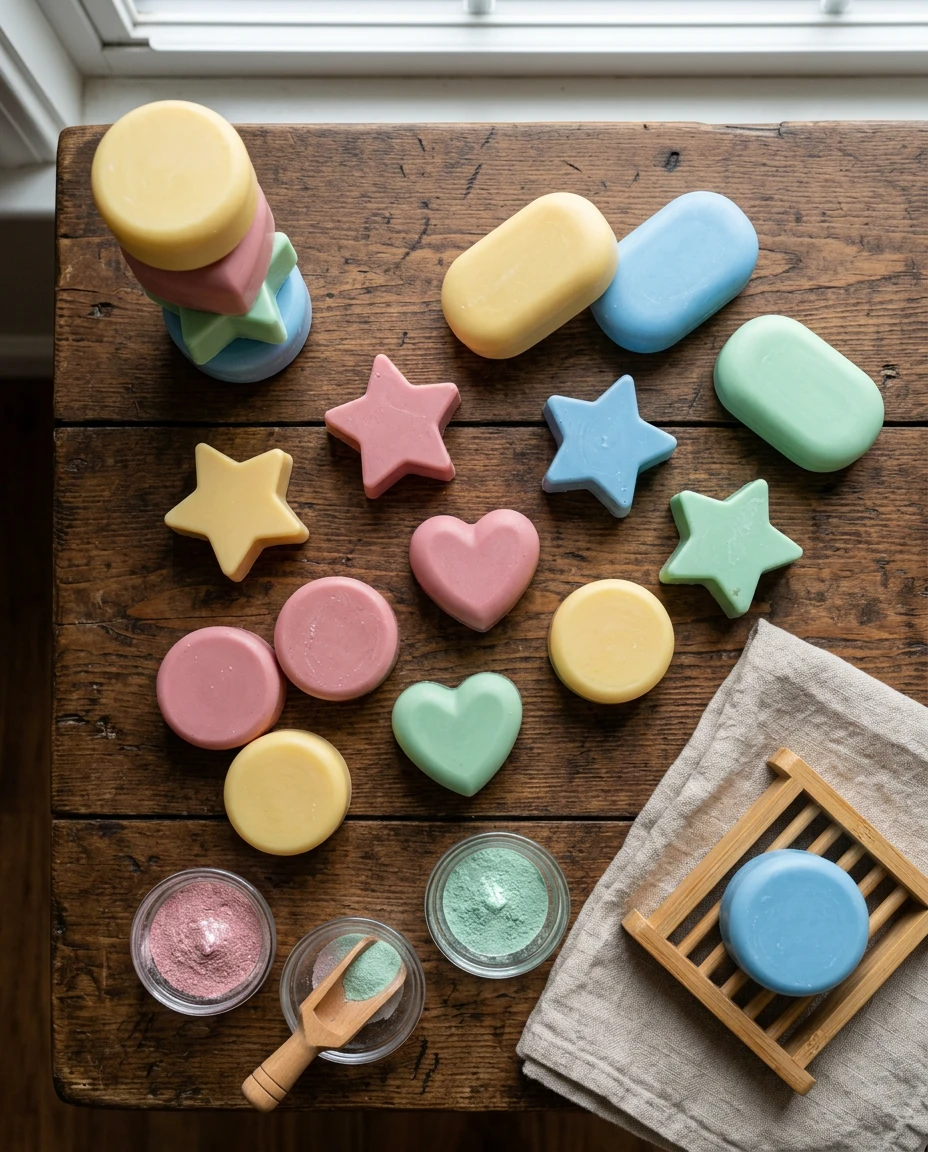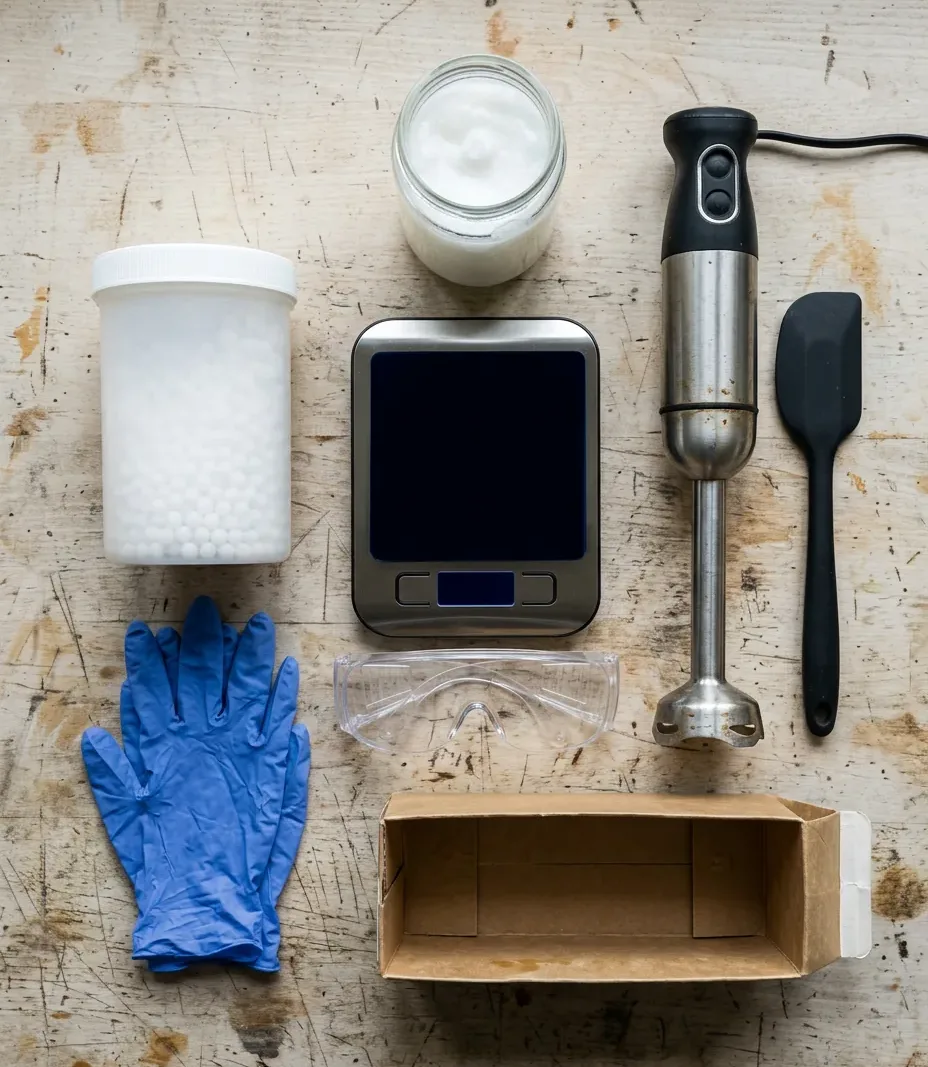
The question that lands in the inbox more than any other is whether soap making is worth starting when you can’t drop a few hundred dollars on equipment first. It is. A working setup runs under $30, and most of that goes on two things you’ll still own in five years.
That number holds on two conditions. You buy one item secondhand, and you make the first mould out of something already sitting in the recycling. Order the same list new from a soap supplier and you’re at about $70. The soap comes out the same either way.
Below is every line item with a real price. Then the four things beginners buy first and don’t need for months.
At a glance
- Total: $29.45, everything needed for a first batch
- Assumes: a thrifted stick blender, a carton for a mould, olive oil already in the kitchen
- Yield: about 9 bars at roughly 100 g each
- Hands-on time: around 45 minutes, then 6 weeks of waiting
- Same list bought new: about $70
Where the money actually goes
Two lines are doing most of the work there. The scale and the lye come to $14.98 between them and neither has a substitute. Everything below those two is cheap, borrowed, or free.
The scale is the one thing you can’t improvise
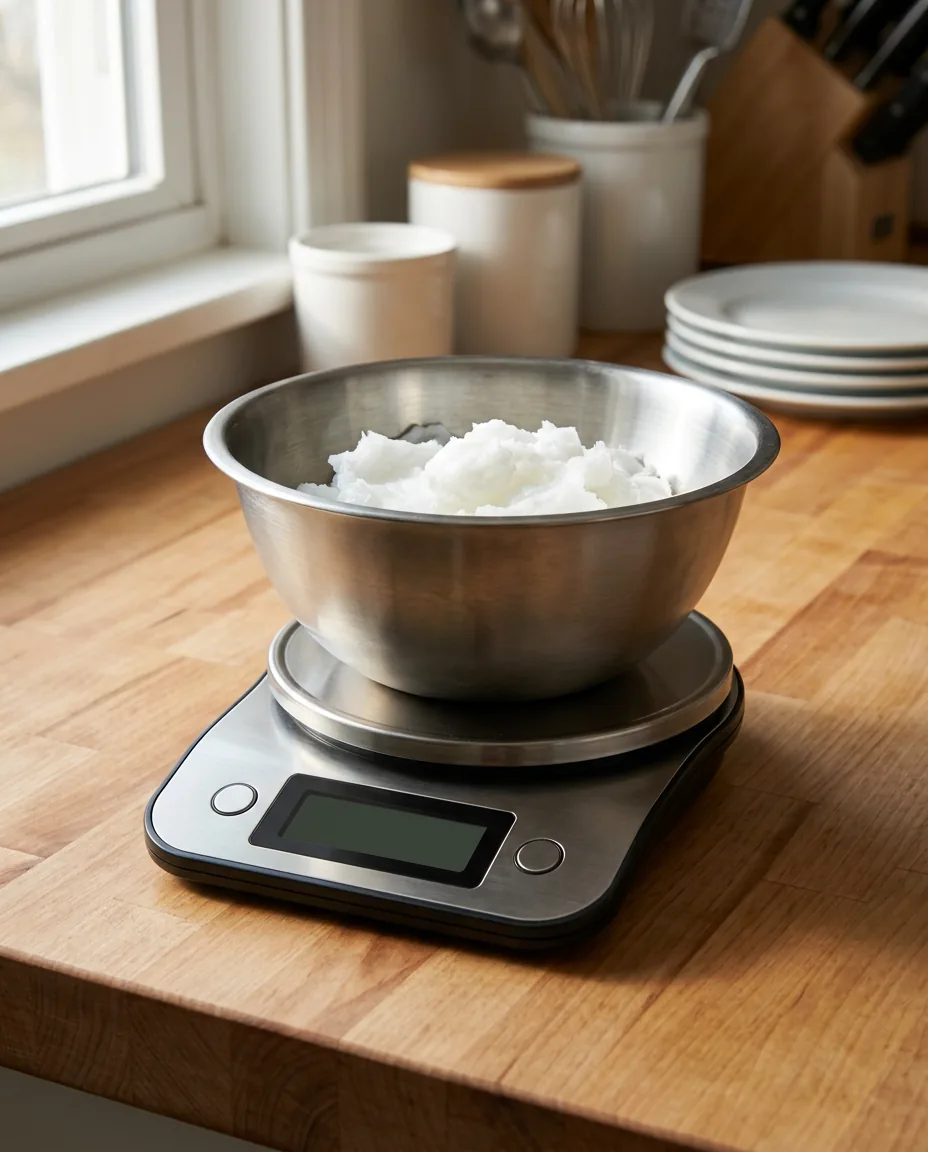
Soap is a fixed-ratio chemical reaction. Miss the lye weight by five grams in a small batch and you get one of two outcomes: a soft bar that never firms up properly, or a harsh one that’s unpleasant to wash with. Measuring cups can’t hit that tolerance. Neither can a scale that only reads whole ounces.
You need 1 g increments and a tare button. Nothing else. A $7.99 supermarket kitchen scale does this as well as a $60 one, and mine has held its calibration through four years of use.
Worth knowing before you buy: most budget scales max out around 5 kg and get vague under about 5 g. For beginner batches that never comes up, because you’re weighing 300 g of one oil and 100 g of another. It starts to matter later, when you’re measuring fragrance in single grams.
Lye, and the gear that has to come with it
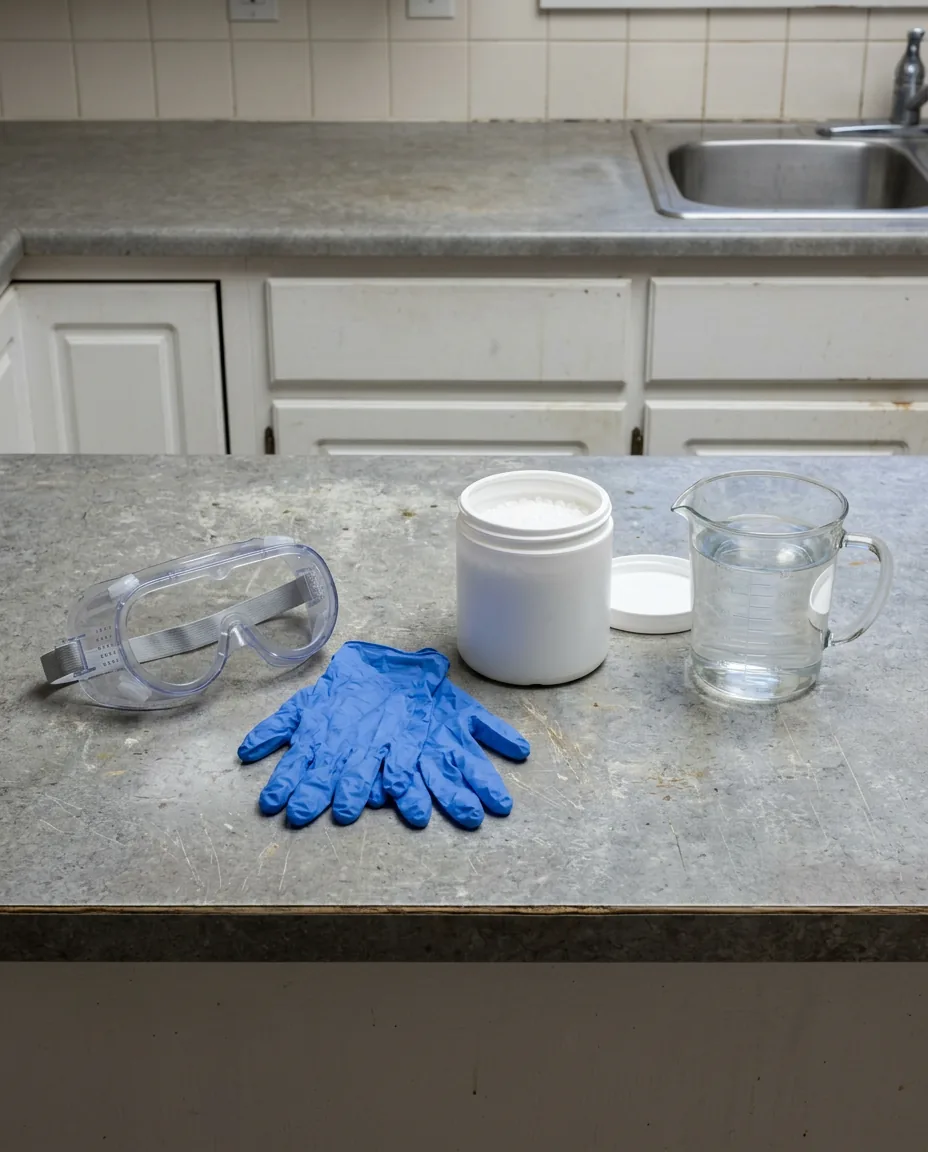
A pound of sodium hydroxide costs about $6.99 at a hardware store, usually sold as drain opener. Read the ingredients before you buy: you want 100% sodium hydroxide and nothing else. Anything with added aluminium flakes or “crystal” additives is for clearing pipes and will ruin a batch. A pound makes somewhere around eight beginner loaves, so this is a one-time purchase for most of your first year.
Goggles and gloves come to $5.48 together. There’s no version of this where you skip them. Get splash goggles rather than safety glasses — the ones that seal against your face. Lye solution flicks when you stir it, and the difference between the two styles is whether a droplet runs down your cheek or straight into your eye.
Nitrile, not latex. A ten-pair box is $2.49 and one pair lasts several batches if you rinse them.
Oils: buy one, use what’s already there
Most beginner recipes want two oils. Coconut brings hardness and lather. Olive brings mildness and slows the batch down enough that you can actually see what’s happening.
Olive oil is already in nearly every kitchen, so the shopping list only has coconut on it. A 14 oz tub in the baking aisle is $3.99. Refined is fine. Virgin costs more and the coconut smell doesn’t survive the reaction anyway, which is a thing nobody mentions until after you’ve paid for it.
Leave palm oil alone for now. It behaves well and it drags a sourcing argument along behind it that you don’t need in week one.
The mould costs nothing
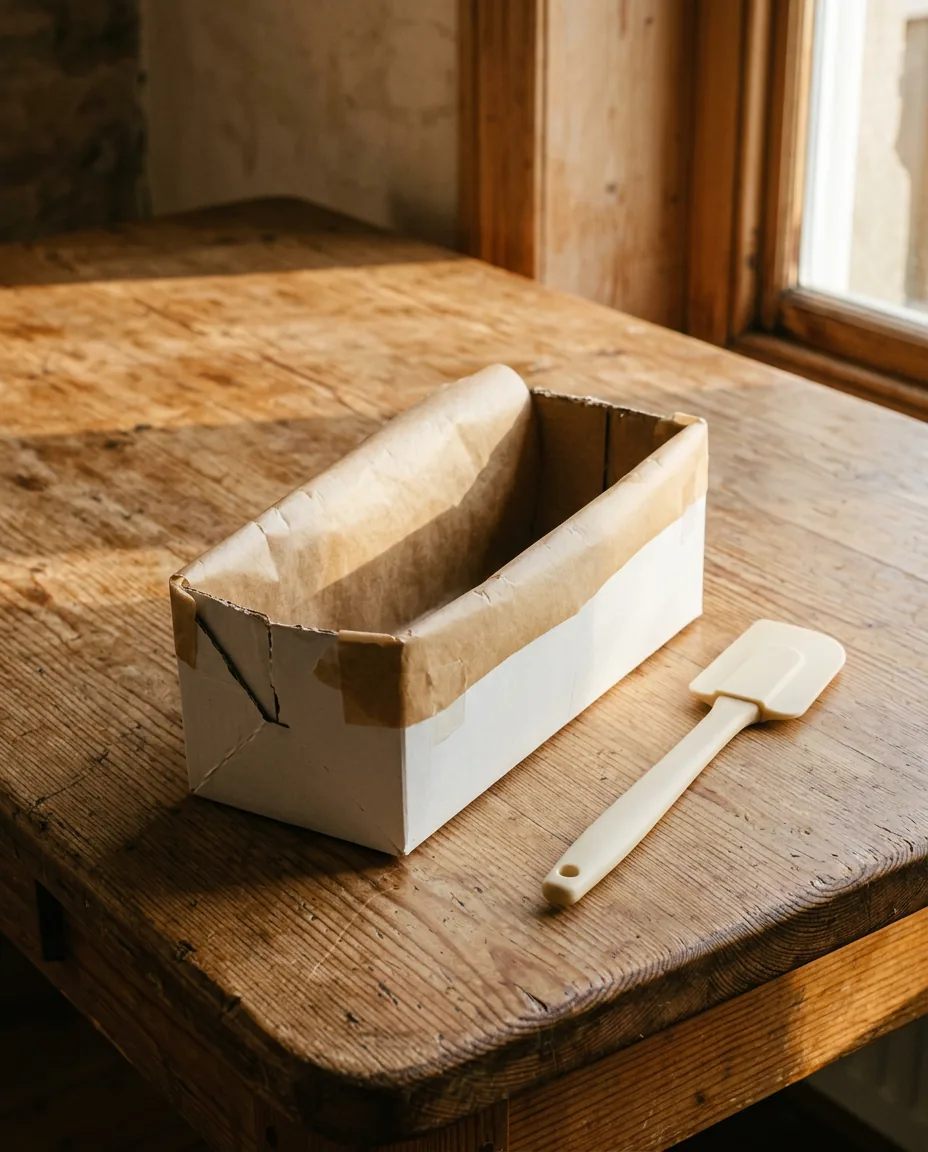
A cardboard carton cut down to about 20 cm long, taped at the seams and lined with parchment, holds roughly a kilo of batter. Let the paper stand proud of the edges. That overhang is how you lift the whole loaf out in one piece two days later instead of digging it out with a spoon.
Silicone loaf moulds are genuinely nicer and they run $12 to $18. Buy one after your third batch, once you know this is going to stick. Buying it first is how people end up owning an $18 mould and no scale.
What to skip in the first month
Every one of these is a reasonable purchase eventually. None of them belongs in the first $30.
| Item | Typical price | When |
|---|---|---|
| Fragrance oils | $9–14 | Batch 3 |
| Mica colourants | $12 a set | Batch 3 |
| Silicone loaf mould | $12–18 | Batch 4 |
| Thermometer | $8 | Not yet |
| Soap cutter | $30+ | Much later |
The thermometer is the one that gets argued about. Plenty of recipes give you two temperatures to match and a thermometer makes that easy. For a coconut-and-olive batch you can put a hand on the outside of the jug instead and go when it feels warm rather than hot. Less precise, and it works fine for the first few loaves.
Fragrance is the purchase people regret most. A $12 bottle of fragrance oil in an unpredictable batch can seize your soap into a solid lump in about fifteen seconds. Learn what a normal trace looks like first.
What happens after you pour
The loaf stays in the mould for 24 to 48 hours. Then you cut it into bars and stand them on a rack with air moving between them for 6 weeks.
That wait is the part nobody budgets for, and it’s not negotiable. Water leaves the bars over those weeks. A bar used at two weeks is soft, dissolves quickly in the shower, and feels sharper on skin than the same bar will at six. Same soap. Different water content.
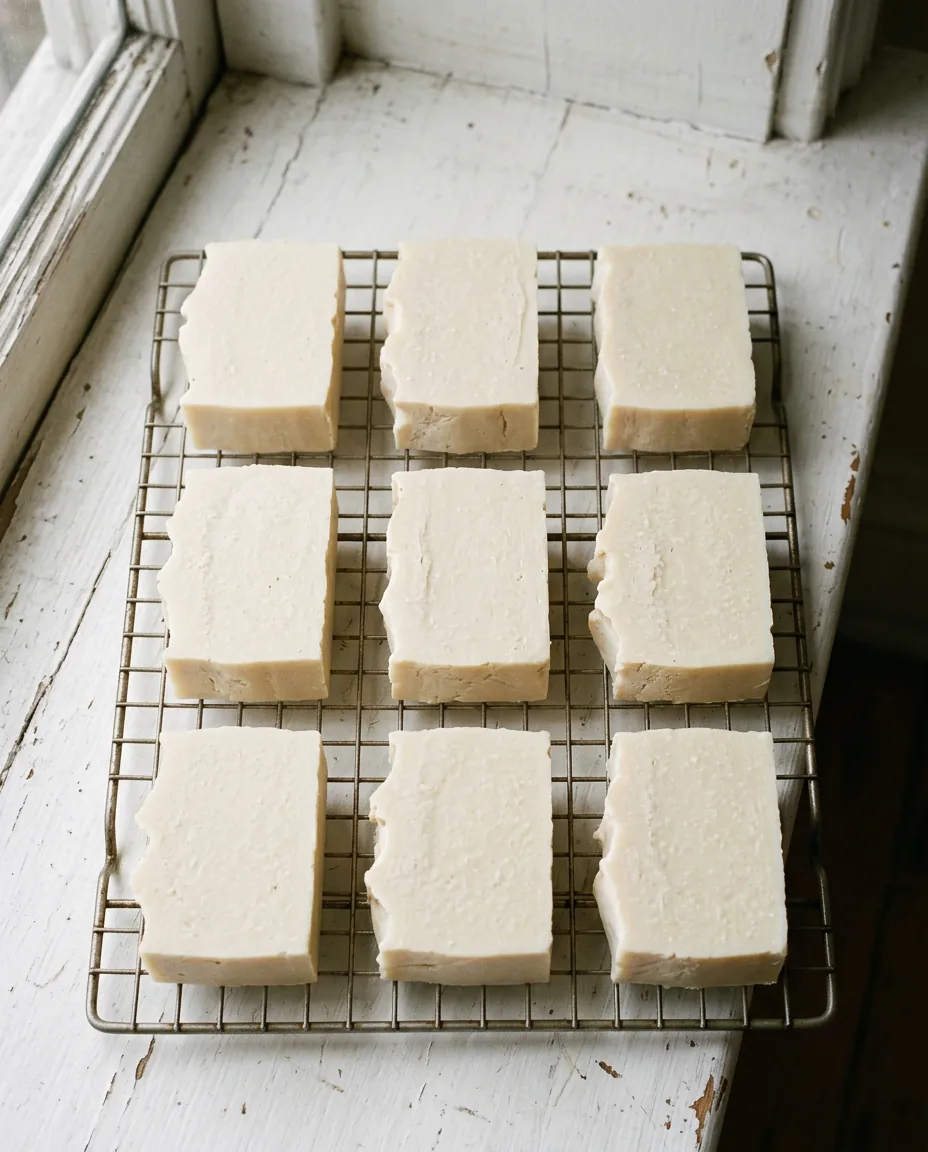
Find the space before you buy anything. Nine bars need about the footprint of a tea towel, somewhere out of direct sun, where nobody will move them for a month and a half. Plenty of people get through the shopping list and then discover they have nowhere to put the results.
The under-$30 list
- Digital scale, 1 g increments, with tare — $7.99
- Sodium hydroxide, 1 lb, 100% with no additives — $6.99
- Coconut oil, 14 oz, refined — $3.99
- Stick blender, secondhand — $3.00
- Splash goggles, sealed type — $2.99
- Nitrile gloves, 10 pairs — $2.49
- Heatproof jug and silicone spatula — $2.00
- Carton for a mould, plus parchment and tape — free
- Olive oil from the kitchen cupboard — free
- A shelf nobody touches for 6 weeks — free
If you’re buying in stages, start with the scale and the goggles. Those two are $10.98 and they’re the ones that decide whether the batch works and whether you get hurt. The oils and the lye are available in every town and can wait until the weekend. A stick blender turns up in most charity shops within a fortnight if you check twice a week — and if it doesn’t, a new one is $18 and blows the budget to $44.45, which is still less than a single set of mica colours and a silicone mould.