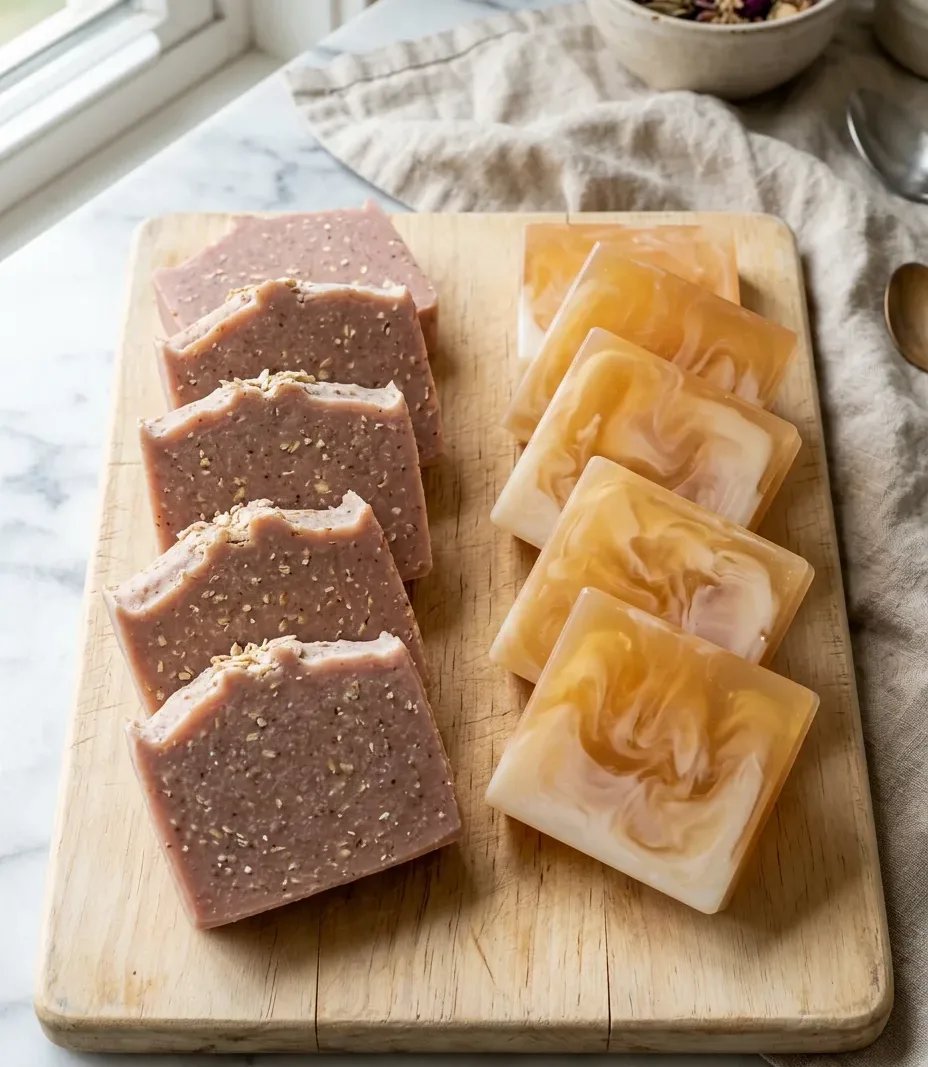
Start with melt and pour. That’s the answer for maybe eight out of ten people who ask, and it has almost nothing to do with safety.
Melt and pour tells you in one afternoon whether you actually enjoy this. You cut bars the same day. Hand one to somebody. By evening you know whether the smell of fragrance oil hitting a hot base at 60°C is something you want in your kitchen every other weekend, or whether the novelty burned off somewhere around the second batch. Cold process takes six weeks to answer that same question. Six weeks is a long time to wait to be told you’d rather be doing something else.
But the honest answer depends on what you want out of it. Some people should skip melt and pour entirely. If you already know the appeal is formulating — picking your own oils, running your own numbers — melt and pour will bore you by batch three. Go straight to cold process and accept that the first two loaves will be ugly.
At a glance
- Melt and pour: a pre-made base you melt, scent and pour — usable the same day
- Cold process: your own oils plus a lye solution, 24–48 hours in the mould, then 4–6 weeks resting
- You handle sodium hydroxide: no for melt and pour, yes for cold process
- First batch buying everything new: around $25 melt and pour, around $52 cold process
- How much of the bar is yours: roughly 5% with melt and pour, all of it with cold process
- Time to a usable bar: 90 minutes against six weeks
What actually separates them
Both are soap. The split is where saponification happens — the reaction between fat and sodium hydroxide that turns oil into soap and glycerin.
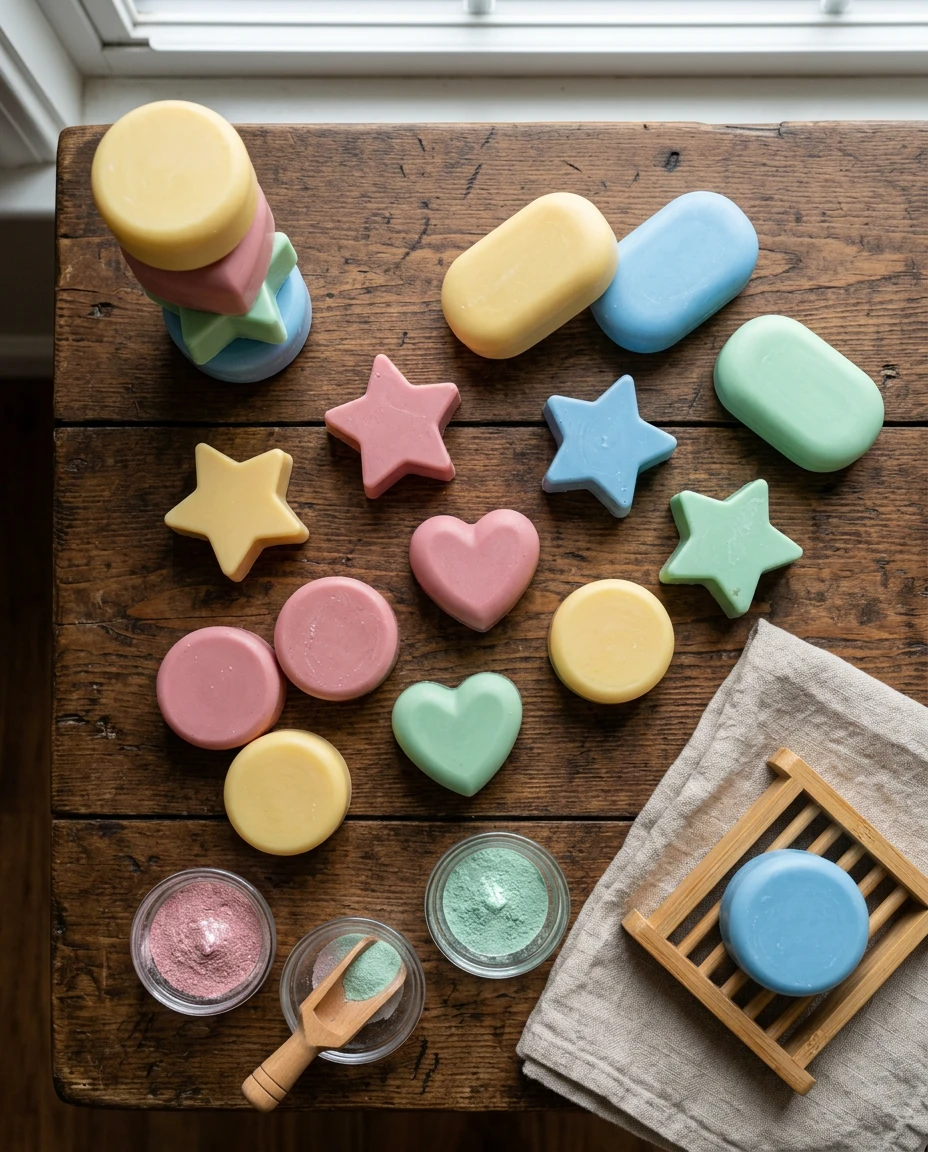
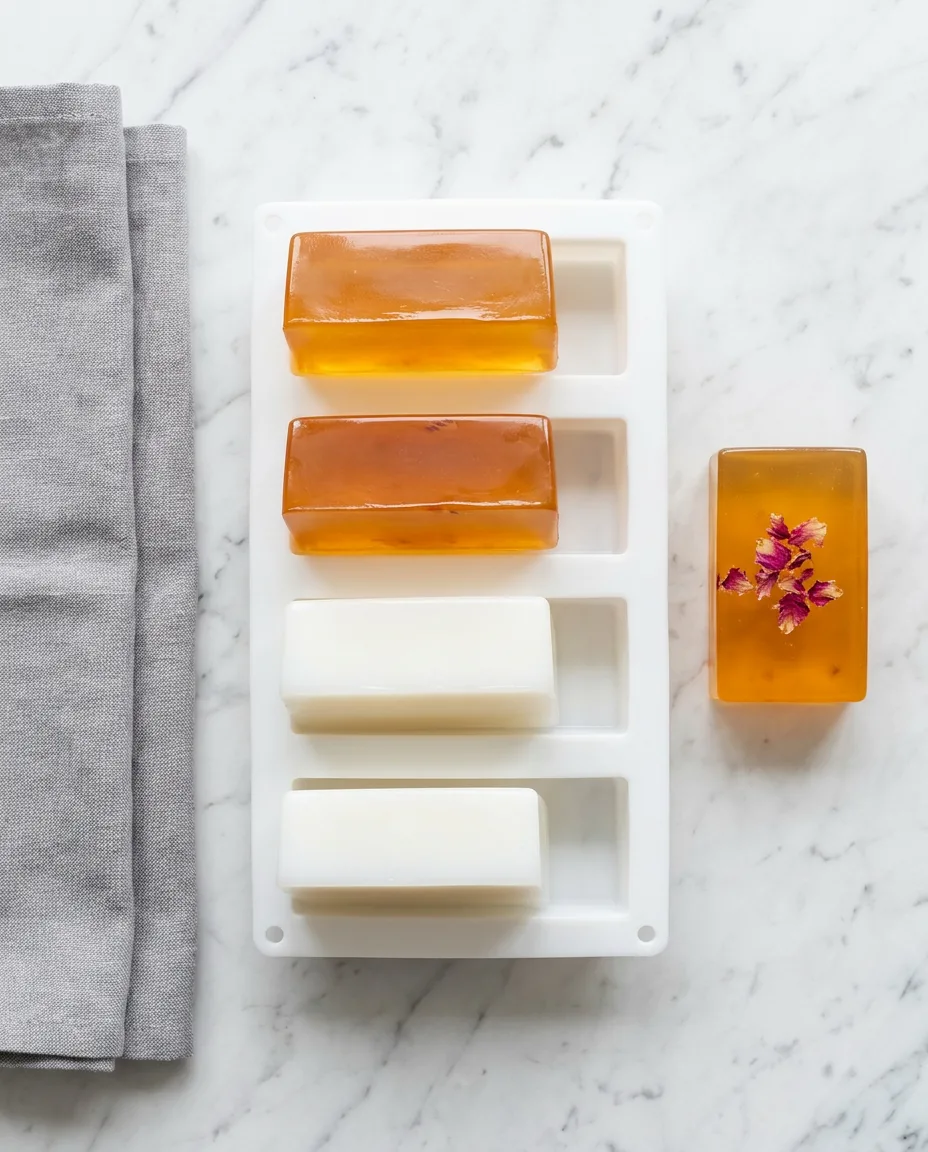
Melt and pour base is already soap. Somebody ran the lye through it in a factory, the reaction finished weeks before the block reached you, and what you buy is a firm slab you cube up and melt at around 60°C. Stir in fragrance. Stir in colour, maybe a spoonful of ground oats. Pour, spritz the surface with rubbing alcohol to pop the bubbles, wait about 90 minutes. Then cut.
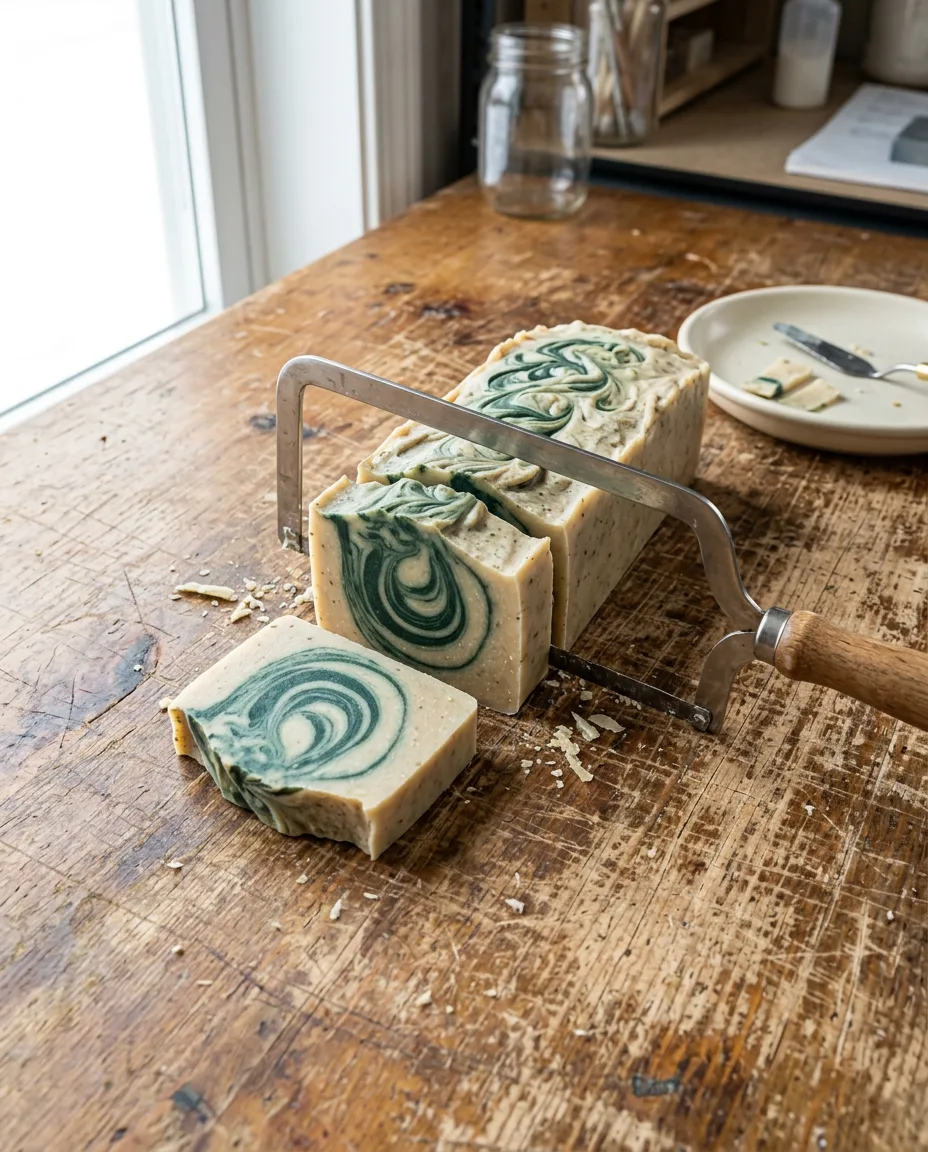
Cold process starts one step earlier. You weigh oils, weigh sodium hydroxide, dissolve the hydroxide into water, and bring the two together yourself. Saponification then happens inside your mould over the following day or two. After that the bars sit for four to six weeks while water evaporates out and the pH settles down. Skip the rest time and you get a soft bar that turns to mush in the dish inside a week.
That’s the whole difference. Everything else people argue about follows from it.
The lye question is smaller than it sounds
People overweight this part. Sodium hydroxide is caustic, it will burn skin, and a splash in an eye can do permanent damage — that’s real, and it’s why goggles are non-negotiable rather than optional. But the handling window is short. You mix the solution, it heats itself to around 90°C on its own, and within 30 minutes it has cooled enough to combine with your oils. Once the batter is in the mould there’s nothing caustic sitting out.
The genuine risk isn’t the chemistry. It’s distraction. A toddler wandering in. A phone call while a jug of lye water sits at counter height and you go to answer it. That’s the shape of nearly every bad story, not somebody misjudging a percentage.
One thing worth being blunt about, because it comes up constantly: melt and pour is not lye-free soap. All soap is made with lye, by definition. The base you buy went through exactly the same reaction. You just weren’t in the room for it.
| Melt and pour | Cold process | |
|---|---|---|
| Time to a usable bar | 90 minutes | 4–6 weeks |
| You handle sodium hydroxide | No | Yes |
| Control over the oils | None | Complete |
| Additives it will take | 3–5% by weight | Whatever the recipe carries |
| Rescuing a failed batch | Remelt it | Rebatch, or bin it |
| How the bar wears in the shower | Softer, goes faster | Harder, lasts longer |
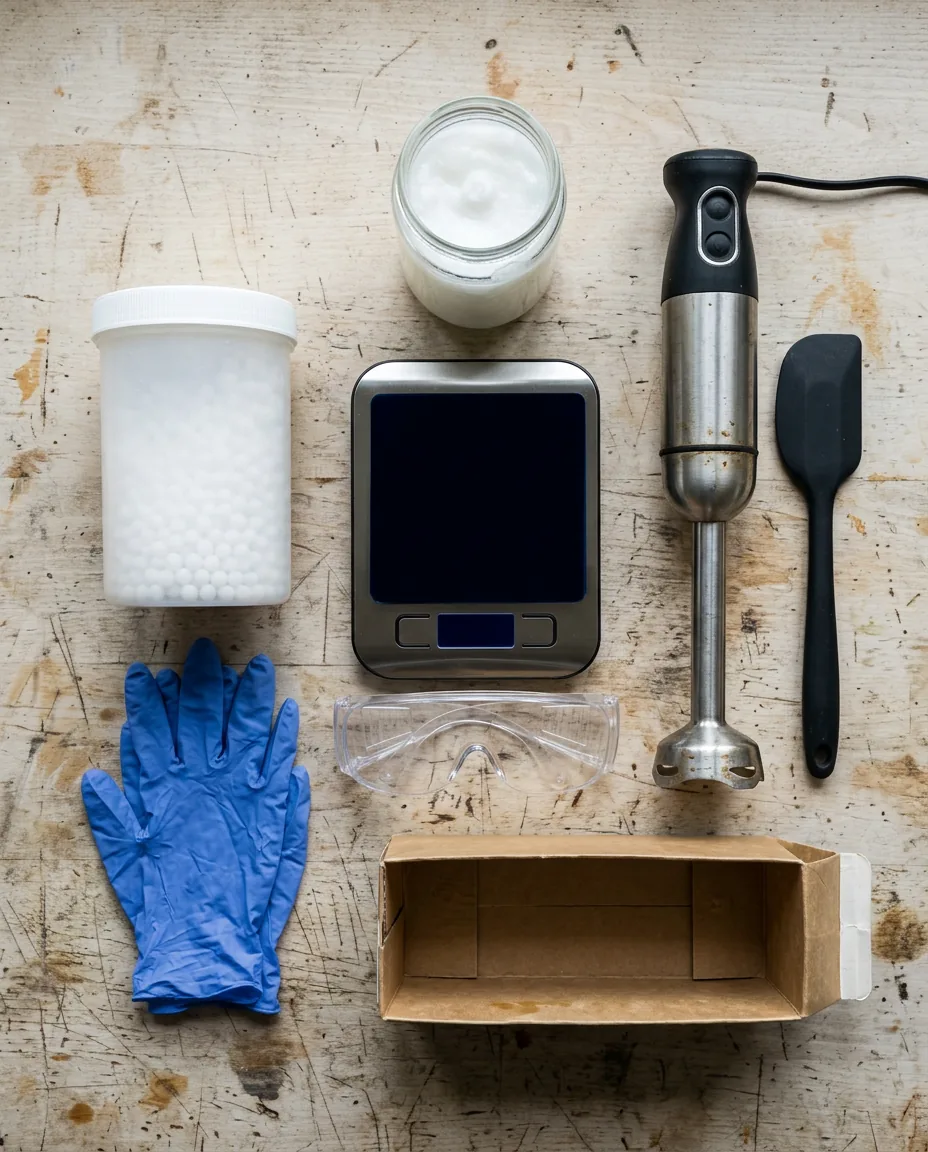
| Kit beyond a pan and a mould | Nothing | A 0.1 g scale, goggles and gloves |
What melt and pour costs you
Now the part the beginner guides tend to leave out.
Glycerin dew is the first surprise. Melt and pour bases run high in glycerin, glycerin pulls water out of the air, and a bar left uncovered in a humid room beads up with sticky droplets overnight. Harmless. Also unsellable, and unpleasant to pick up. The fix is wrapping each bar in shrink film or cling film within a few hours of cutting, which means melt and pour has a wrapping step that cold process doesn’t.
Then there’s how little of the bar is yours. You can add roughly 3 to 5 percent by weight of anything before the base stops setting firm or the additive sinks to the bottom. So a goat milk melt and pour bar is a manufacturer’s goat milk base with your fragrance in it. That’s fine, and it still makes a good bar. Just know what you’ve made before you describe it to somebody.
Read the base’s ingredient list before you buy rather than after. The cheaper clear bases lean on sodium lauryl sulfate and propylene glycol to get that glassy look, and if your reason for making soap at home is avoiding those, a $6 base defeats the exercise. Better bases run $12 to $16 per kilo.
The advantage nobody mentions enough: you can remelt a failure. Fragrance too strong, colour gone muddy — cube the bars up and melt them again. Cold process gives you one attempt per batch.
Where cold process is harder than it looks
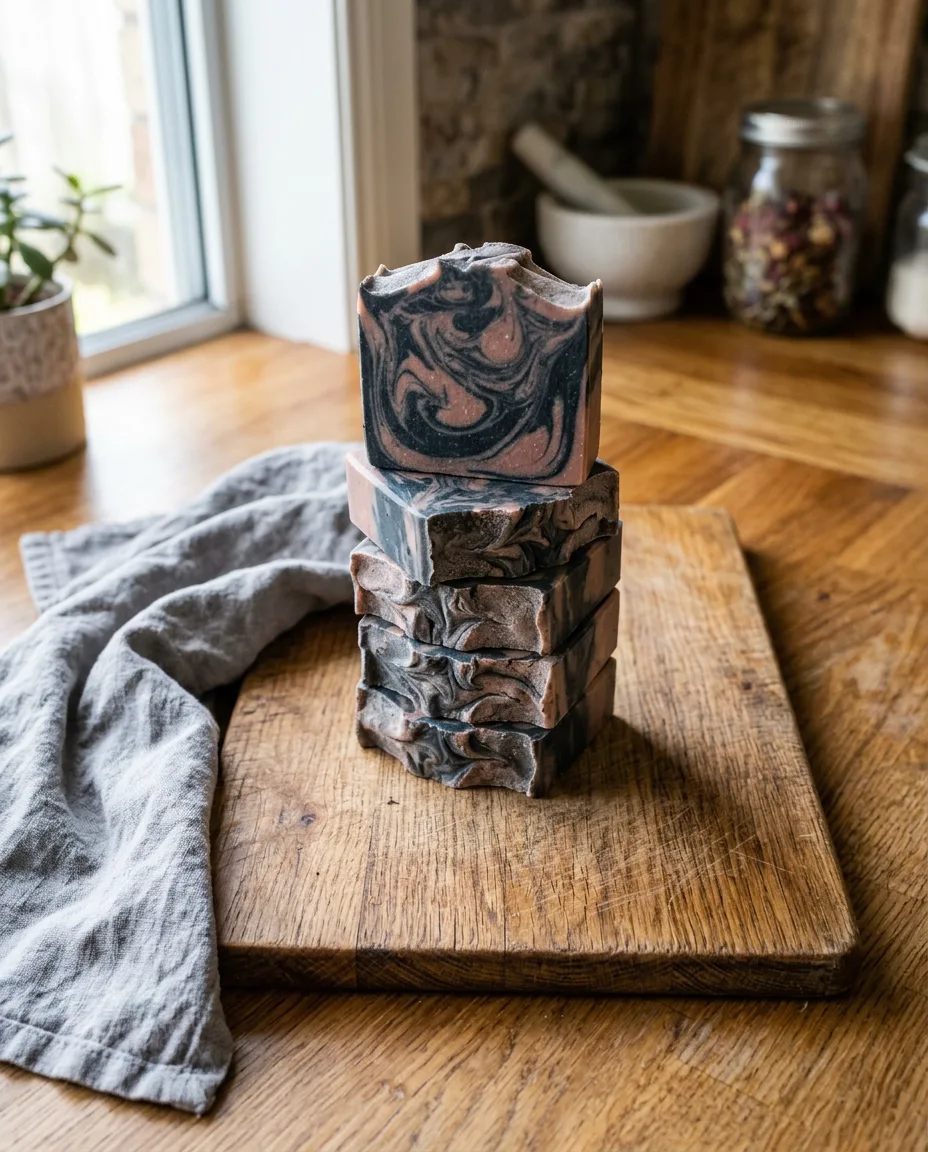
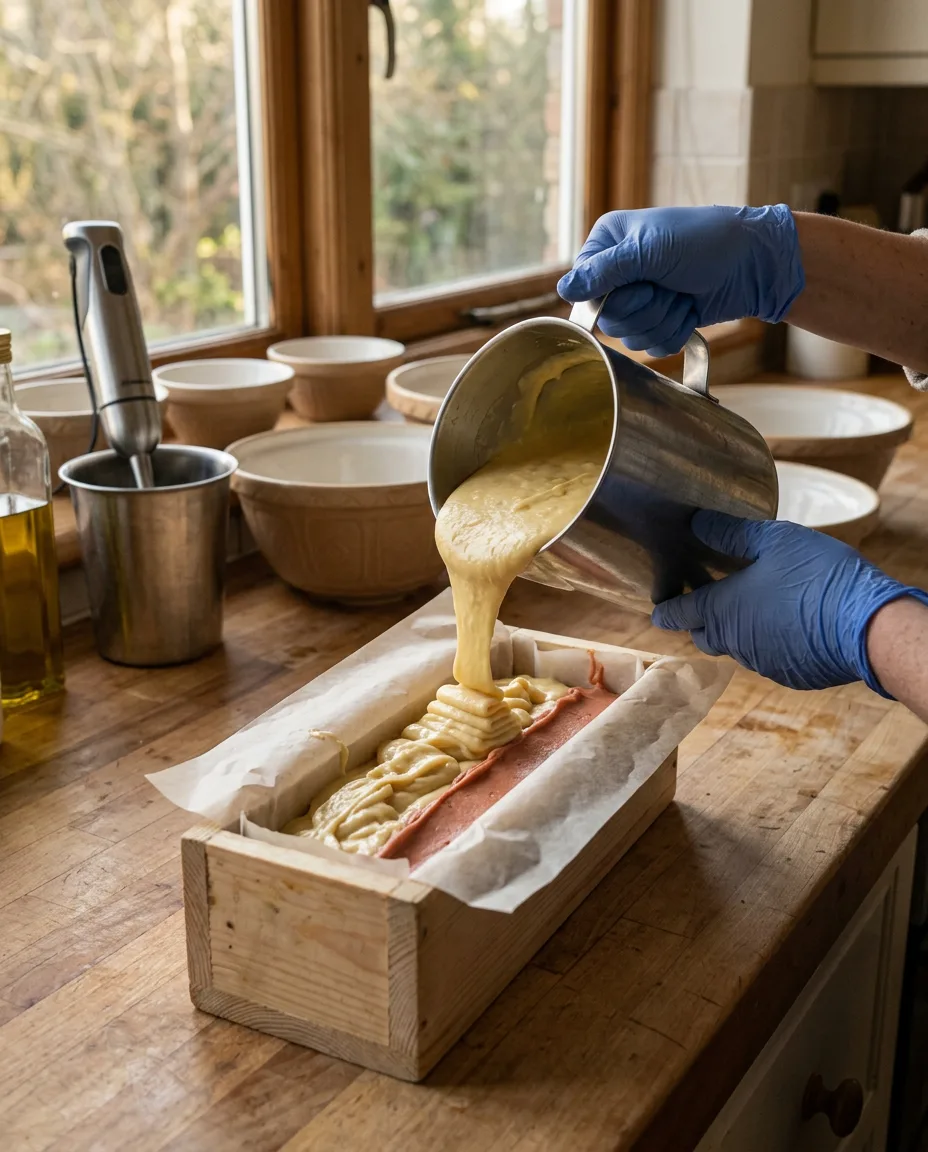
Trace is the first hurdle. It’s the point where the batter thickens enough to hold a drizzled line on its own surface, and every guide describes it as looking like thin pudding, which helps about as much as you’d expect. You will overshoot it on batch one. Most people do, and an overshot trace mostly costs you the swirl, not the soap.
Temperature ruins more batches than measurement error does. Too warm and the loaf overheats in the mould, splits down the middle and grows a crust across the top. Too cool and high-stearic oils like palm or cocoa butter can seize into false trace, where the batter looks thick but hasn’t really started reacting. Hold both your oils and your lye water in the 38–45°C range and most of that goes away.
Every recipe change also means running the calculator again, and this is where beginners come unstuck, because oils are not interchangeable by weight. Coconut oil needs 0.183 g of sodium hydroxide per gram of oil. Palm needs 0.141. Swap one for the other at the same weight without recalculating and your lye is off by about 30 percent — either a harsh, lye-heavy bar, or a greasy one that never firms up properly.
Six weeks is also just six weeks. You need somewhere flat and airy, out of direct sun, where 9 to 12 bars can sit untouched. A spare shelf works. Top of a wardrobe works. A kitchen counter you actually use does not.
What the first cold process batch costs
The same first batch in melt and pour lands around $25: a kilo of decent base at $14, a silicone mould at $9, and a small bottle of fragrance oil you’ll get six batches out of. Buy the scale secondhand and the cold process number drops under $40. The gap narrows fast after batch one, because the scale, goggles and gloves are a one-off and the oils work out cheaper per bar than base does.
Go straight to cold process if all four are true
- You have somewhere 9 to 12 bars can sit undisturbed for six weeks
- Your scale reads to 0.1 g, not 1 g
- You can get 90 uninterrupted minutes with no children or pets in the room
- The appeal is picking the oils, not just picking the scent
Three out of four isn’t enough. The third one is the one people talk themselves out of, and it’s the one that matters.
So which one
Buy a kilo of white melt and pour base and one silicone mould. Make two batches over a fortnight and see whether you’re still thinking about it after the second. If you are, that $23 bought you something real — the mould works for cold process too, and you’ll have learned how much fragrance is too much without wasting 900 g of oils to find out.
Skip that step only if you already know you want to formulate. In that case buy the scale first and the goggles second, then make a plain coconut oil bar at 20 percent superfat before you attempt anything with a swirl in it. It’s a dull recipe that’s very hard to get wrong, which is exactly what a first batch should be.