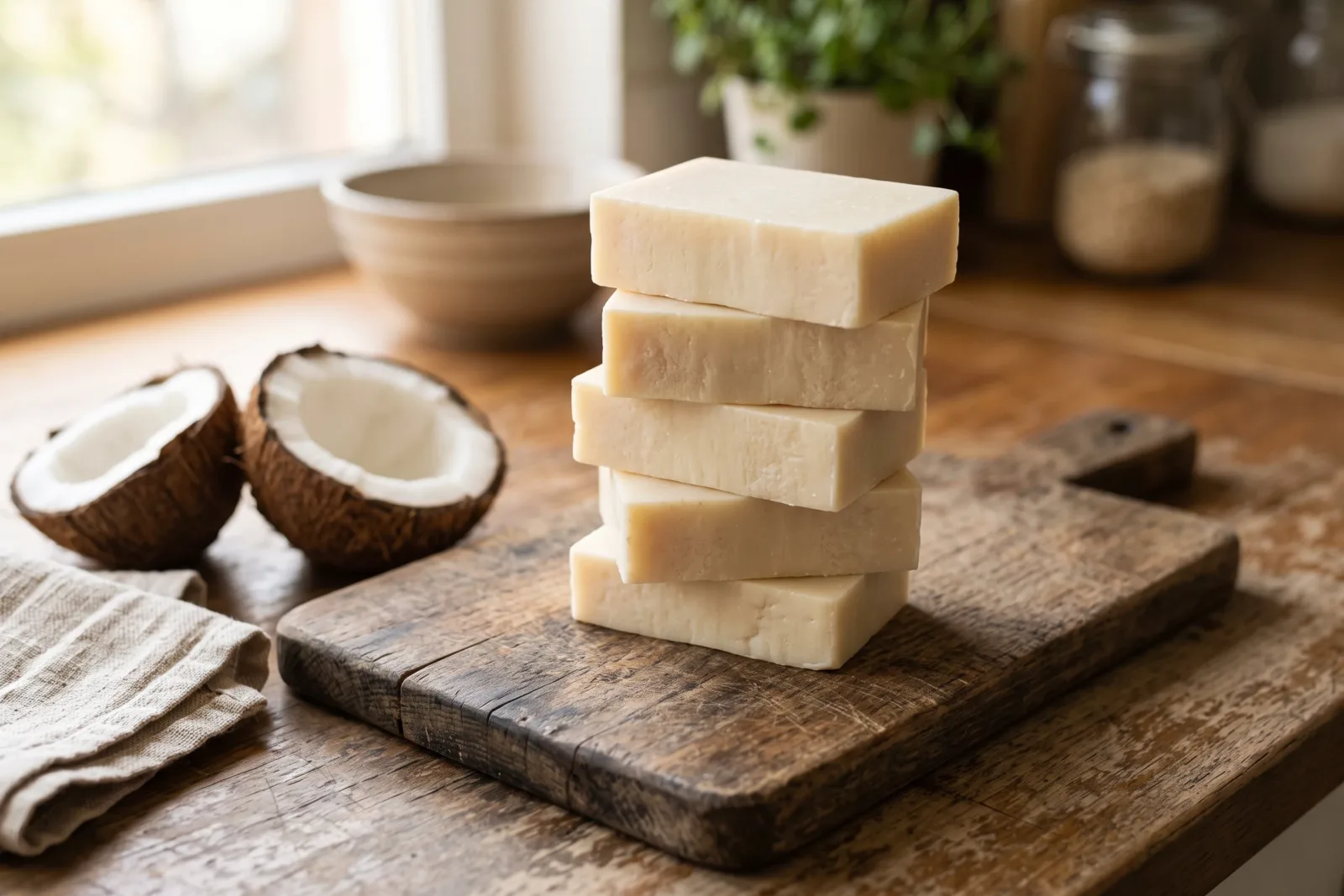
Three ingredients. That’s it — coconut oil, lye, and water. No fragrance oils to weigh out, no colorant to fumble with, nothing between you and a working bar of soap.
Most “easy beginner soap” recipes aren’t actually easy. They ask you to blend four or five oils in specific ratios, track trace against a color swirl, and hope none of it separates. This one skips all of that. One oil means one number to get right, and coconut oil is about as forgiving a base as this hobby has — it traces fast, it hardens fast, and it doesn’t sulk if your temperatures are a few degrees off.
What you actually need
For a small first batch, weigh out:
- 500 g coconut oil (76°F/24°C melt point — refined, unscented is easiest to source)
- 73 g sodium hydroxide (lye), 99% pure
- 190 g distilled water
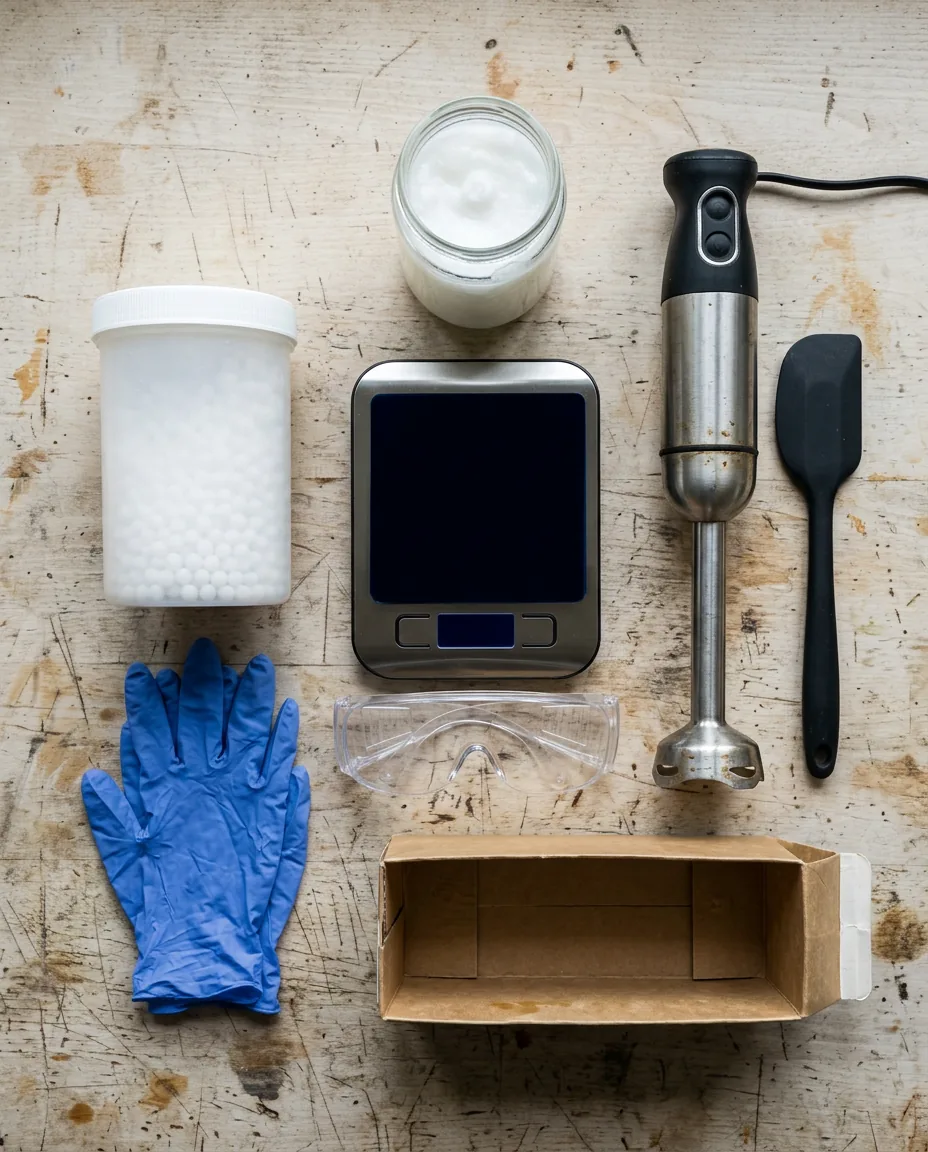
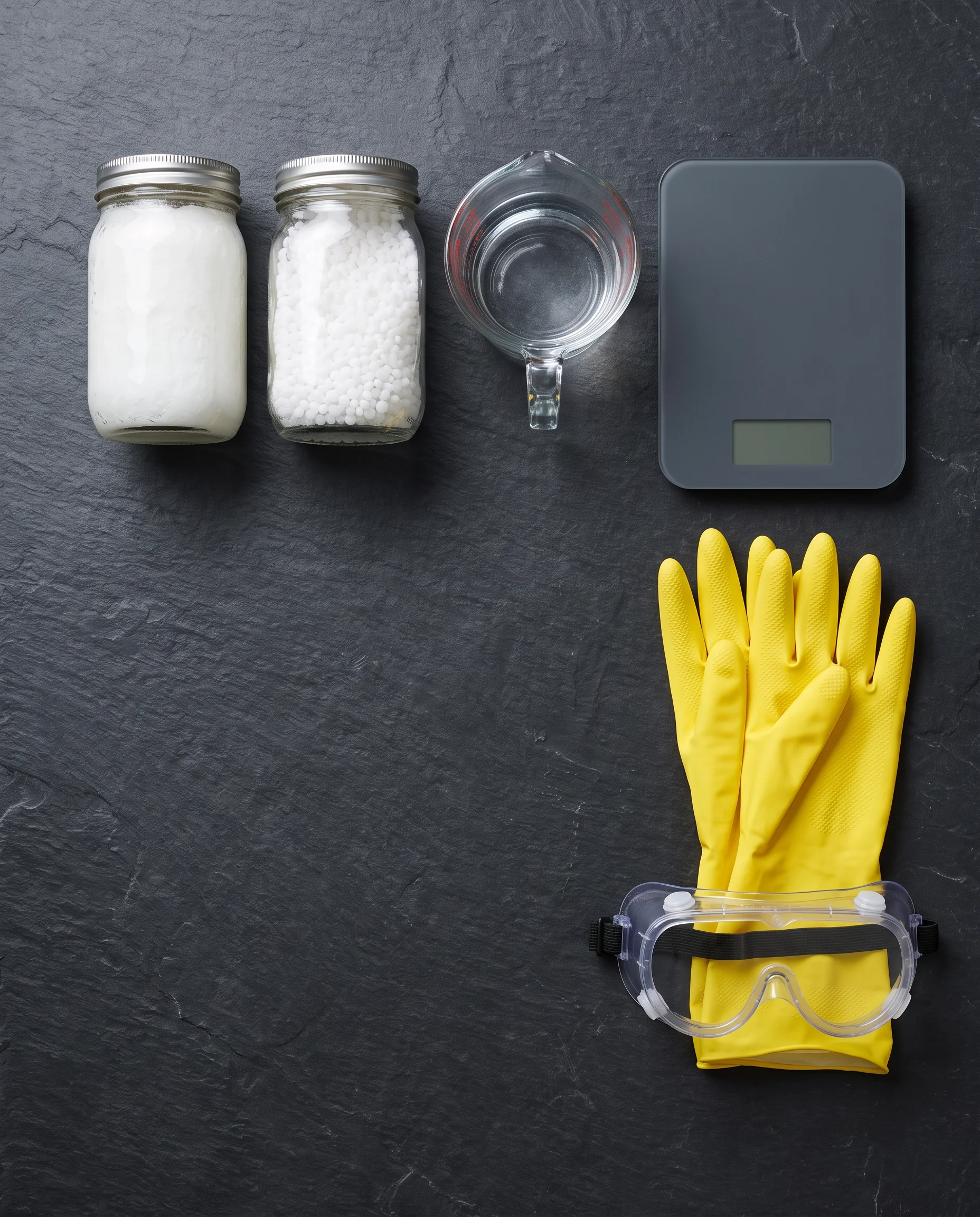
Tools matter more than the recipe does here: a digital scale accurate to 1 g, a stick blender, a heatproof pitcher for the lye solution, a bowl for the oil, a thermometer, rubber gloves, and safety goggles. A silicone loaf mold works fine — you don’t need anything fancy for a first run.
Before you start
Work somewhere with a window you can open. Lye solution off-gasses for a minute or two right after mixing, and you don’t want to be breathing that in a closed bathroom. Keep the gloves and goggles on until the batter is in the mold, not before you pour, after.
The steps
1. Mix the lye solution
Add the 73 g of lye to the 190 g of water, never the other way around. Stir until it’s clear, then set it aside somewhere safe. The solution jumps to around 190°F/88°C almost instantly. That’s normal, not a sign anything went wrong.
2. Melt and measure the oil
Melt the coconut oil fully, then let both the oil and the lye solution cool to somewhere between 100°F and 110°F. They don’t need to match exactly. Within 5 degrees of each other is close enough for a single-oil recipe like this one.
3. Combine and blend to trace
Pour the lye solution into the oil, not the reverse. Stick-blend in short bursts, five seconds on, five off, until the mixture thickens to the consistency of warm pudding. With straight coconut oil this usually takes 60 to 90 seconds. Blink and you’ll overshoot it.
4. Pour and insulate
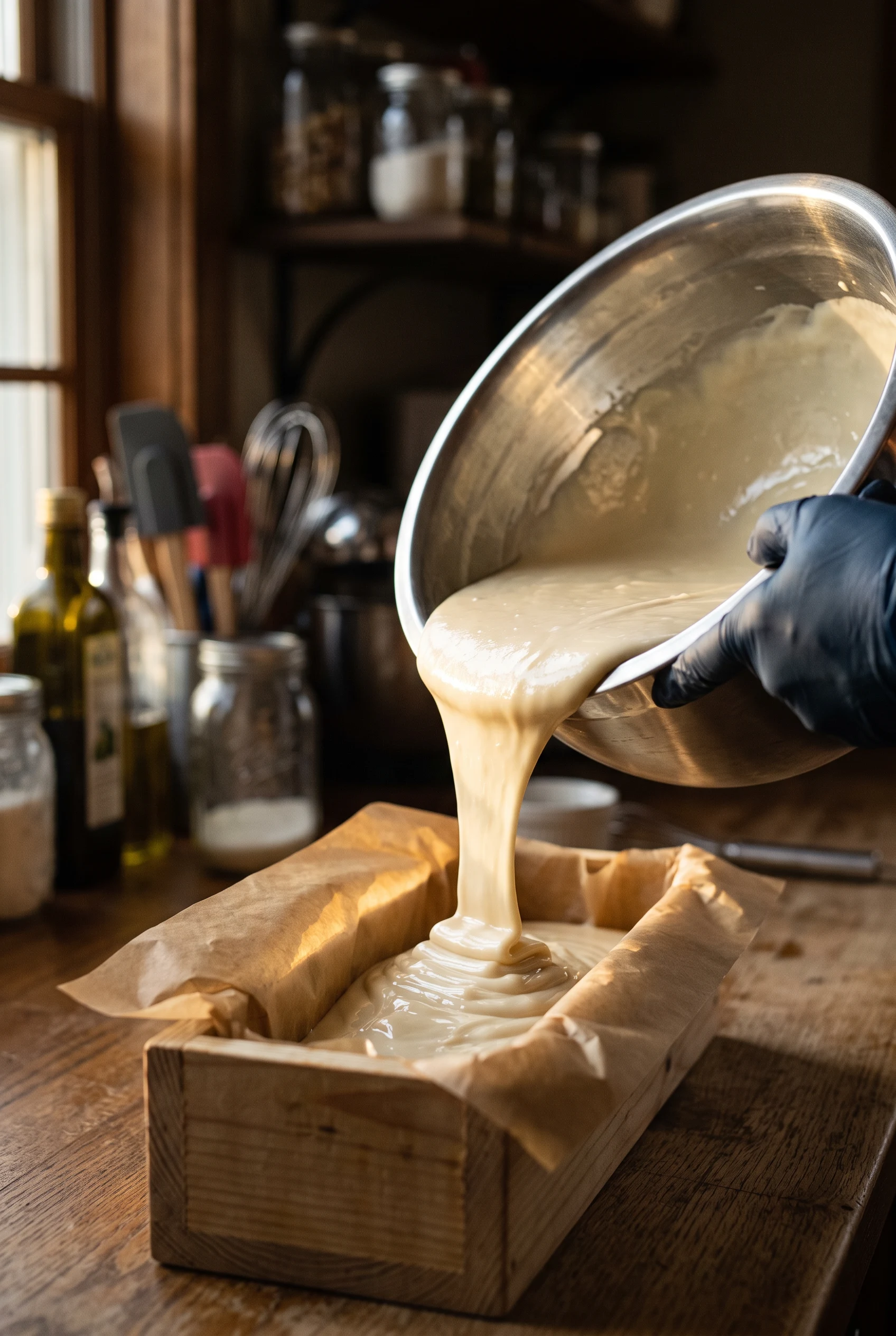
Pour into your lined mold, tap it on the counter twice to knock out air bubbles, and cover it with a towel. Coconut oil soap generates its own heat fast, so it doesn’t need the aggressive insulating a slower-tracing oil blend would.
5. Unmold and cut
Check it after 24 hours. If a light press leaves no dent, it’s ready to unmold and cut into bars — about six bars at roughly 100 g each from this batch size.
6. Let it rest
Set the bars on a rack with space between them and leave them for 4 to 6 weeks. This isn’t about the soap becoming safe to use — the saponification reaction is basically done within 48 hours. It’s about water evaporating out, which makes the bar harder and makes it last longer in the shower.
If your kitchen runs cold, work at the higher end of the 100–110°F range. Coconut oil batter that starts too cool can seize before you’ve even finished pouring it.
A 20% superfat sounds generous until you remember it’s straight coconut oil. At 0% superfat this bar would strip your skin. At 20%, it’s still cleansing but noticeably milder — that’s the trade most soapers make with this oil, not something to skip.
Why this recipe actually works on the first try
Multi-oil recipes fail for beginners because there’s more than one variable to misjudge at once — oil ratios, differing trace speeds, temperature spread between multiple melted fats. A single oil removes most of that. Coconut oil in particular traces reliably regardless of small temperature swings, which is exactly what a first attempt needs.
The honest downside: this isn’t a subtle, luxury bar. It’s a plain, hard-working soap with a big lather. If you want something creamier on the skin, that’s a second recipe built around a blend of oils, not this one.