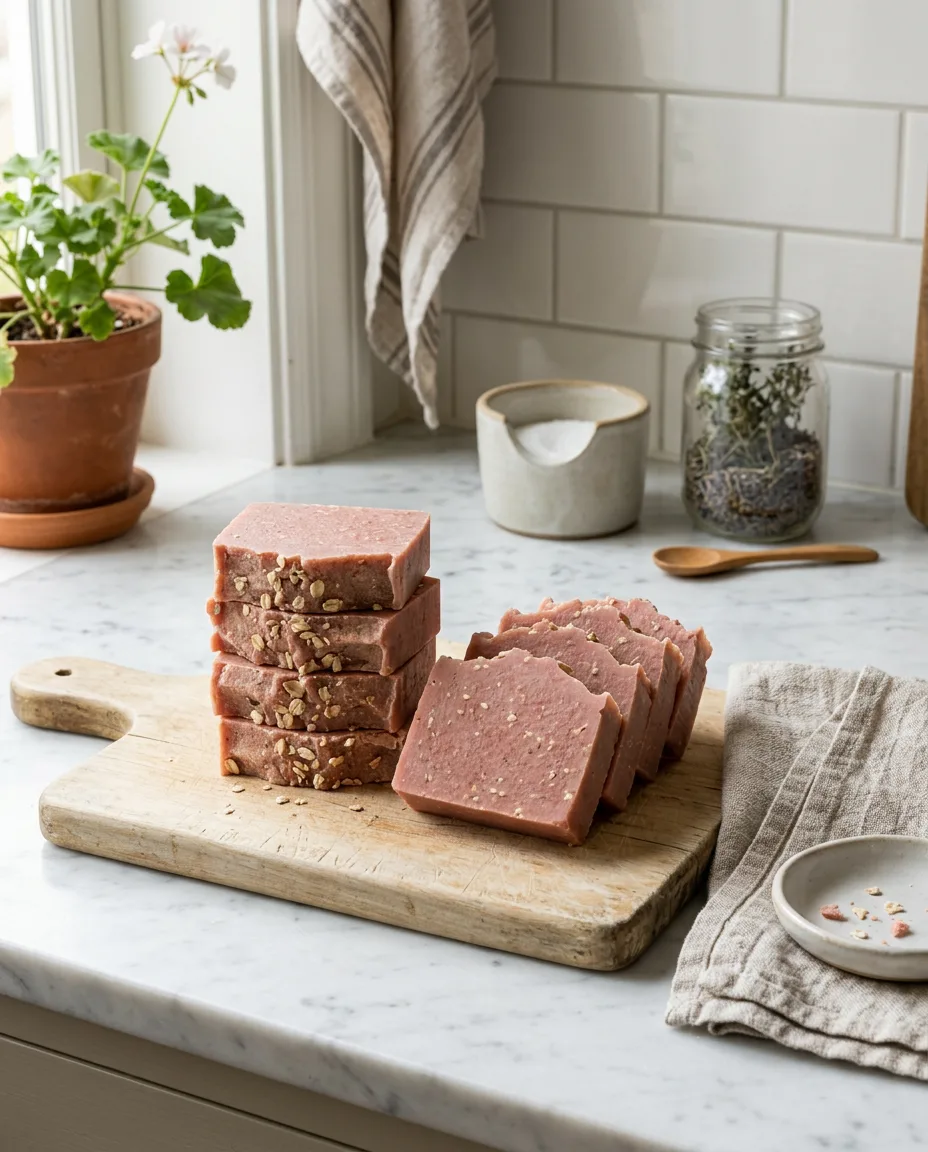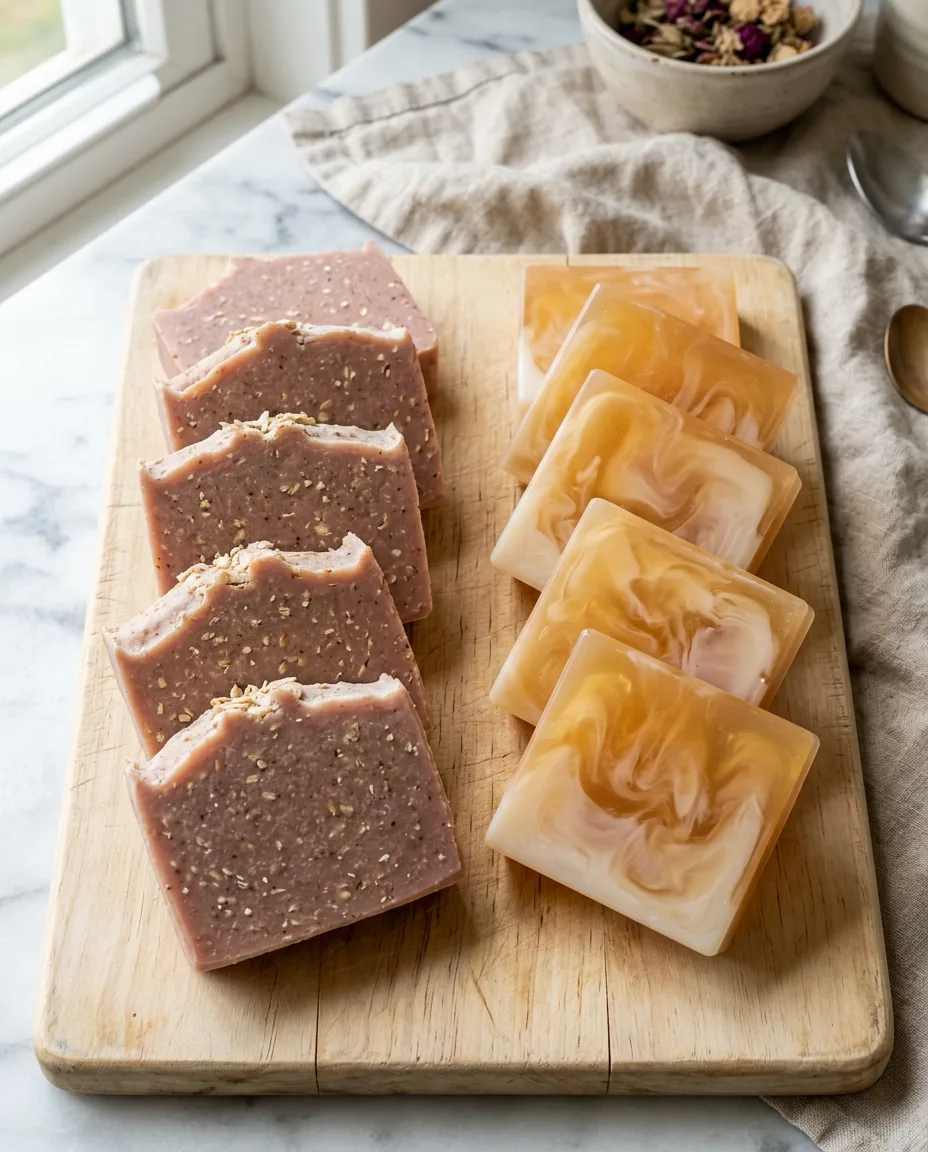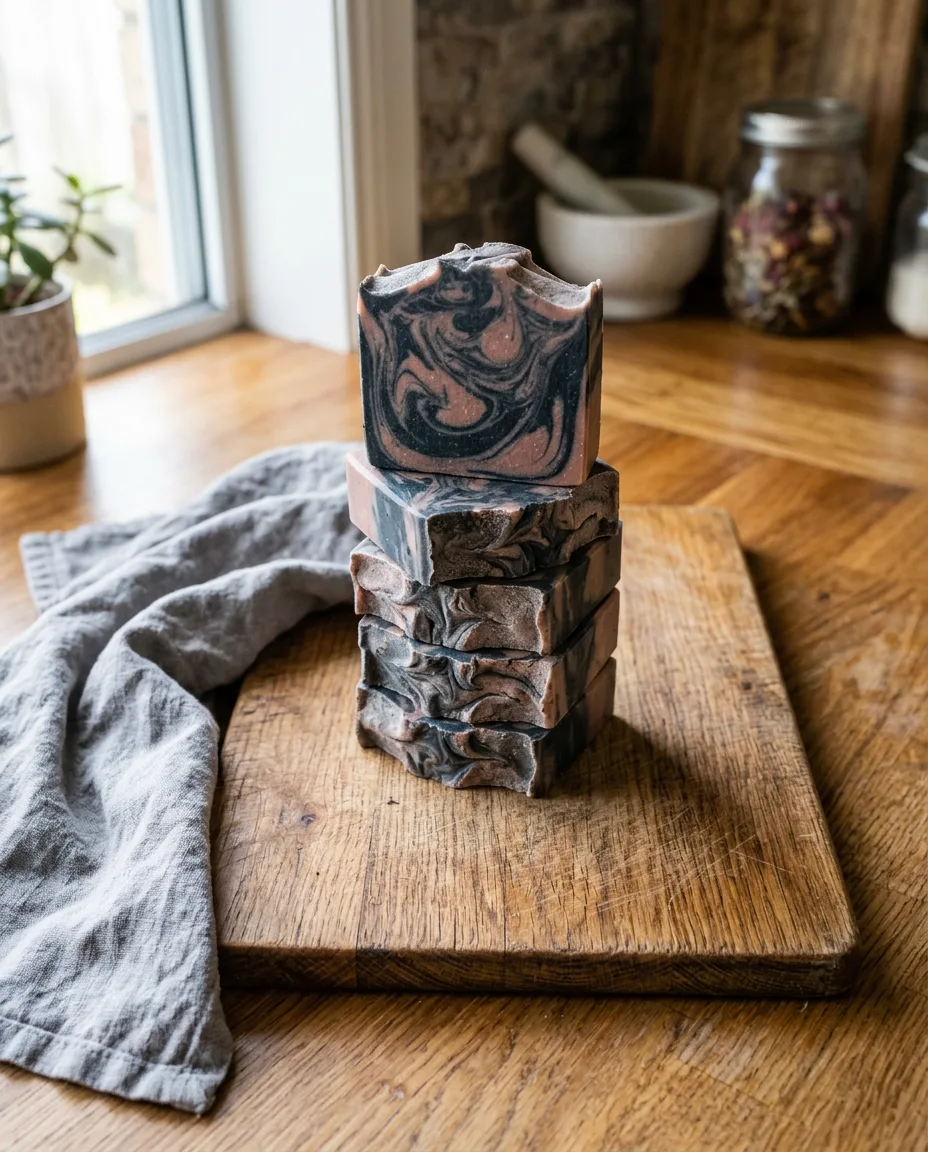
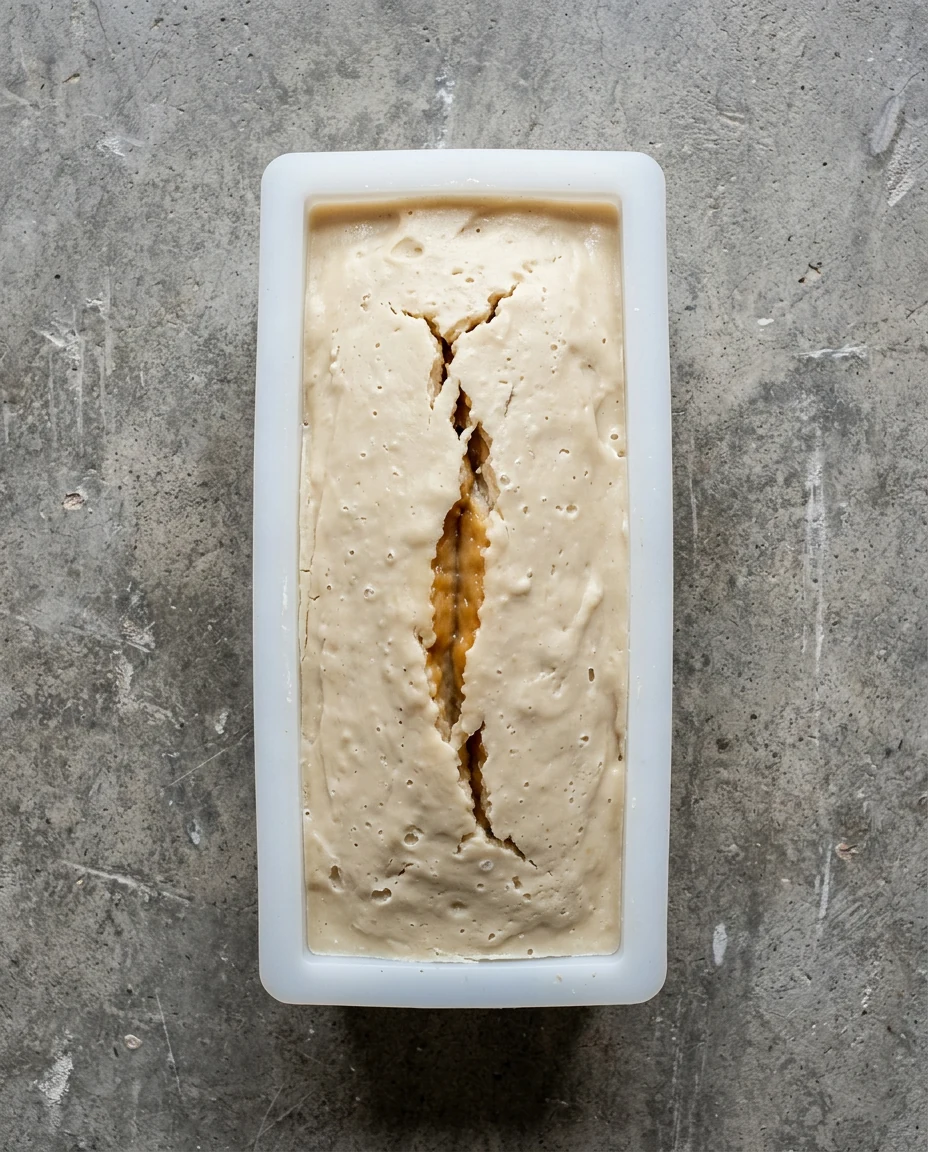
A reader sent me a photo in May: a soap loaf with a crack running its whole length, split open like a baked potato. She wanted to know which ingredient she’d got wrong. None of them, as it turned out. Her recipe was sound and her measurements were accurate. Her kitchen was 24°C, and she’d wrapped the mould in a bath towel because a video told her to. The batch cooked itself overnight.
That’s how beginner soap usually fails. Not chemistry you got wrong, but process nobody told you mattered yet. Five mistakes cover almost everything that lands in my inbox. Three of them you can walk back. Two you can’t, and knowing which is which before you start beats finding out afterwards.
Find yours first
Match what you’re actually looking at, then jump straight to the fix.
Measuring by the cup instead of the gram
Bin it
What happens
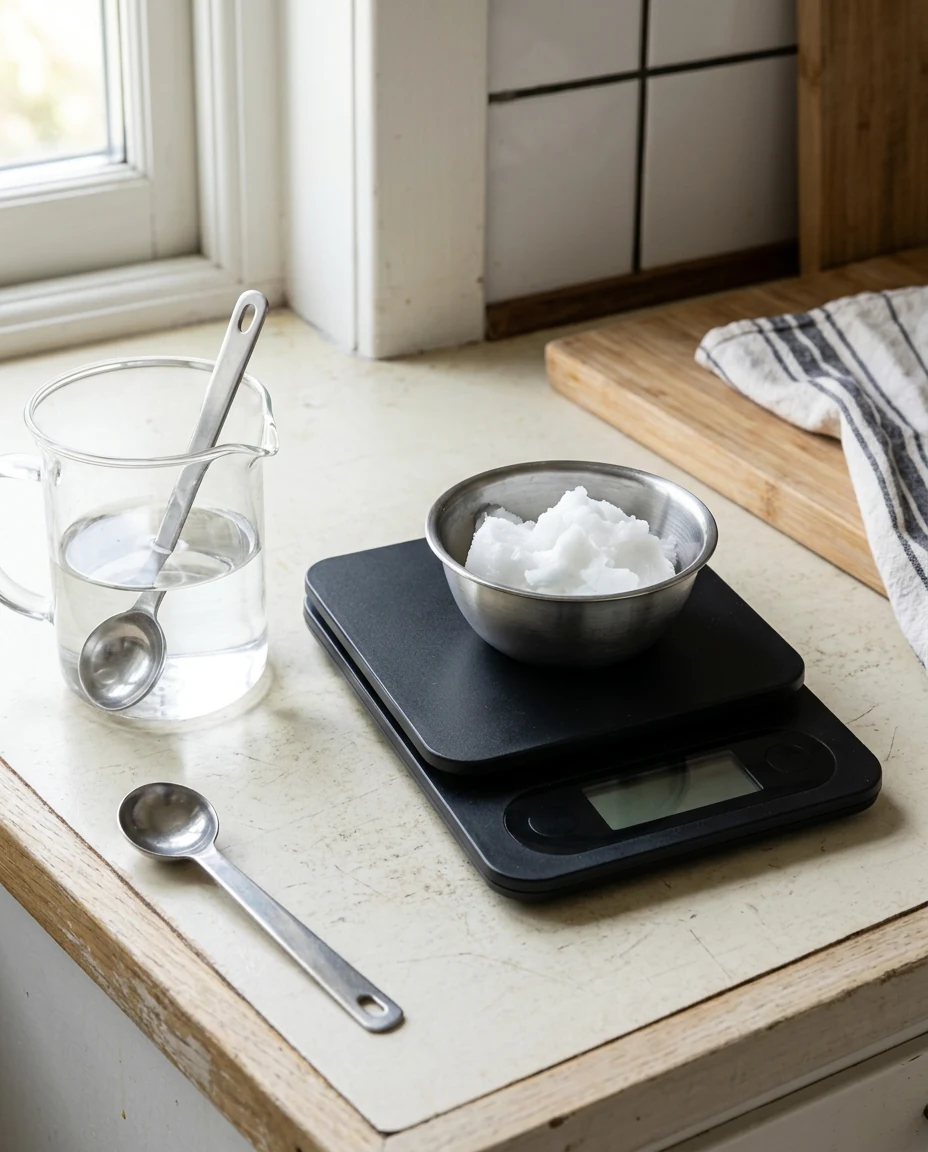
Lye is where volume measuring stops being a rounding error. Dry sodium hydroxide beads settle as they sit, so a level cup scooped from a fresh jar and one scooped from a half-empty jar can differ by 15% or more. Oils do it too. Coconut oil packed solid into a cup weighs roughly a third more than the same cup poured melted. Get the ratio wrong in the direction of too much lye and the surplus stays in the finished bar, unreacted and caustic.
Fix
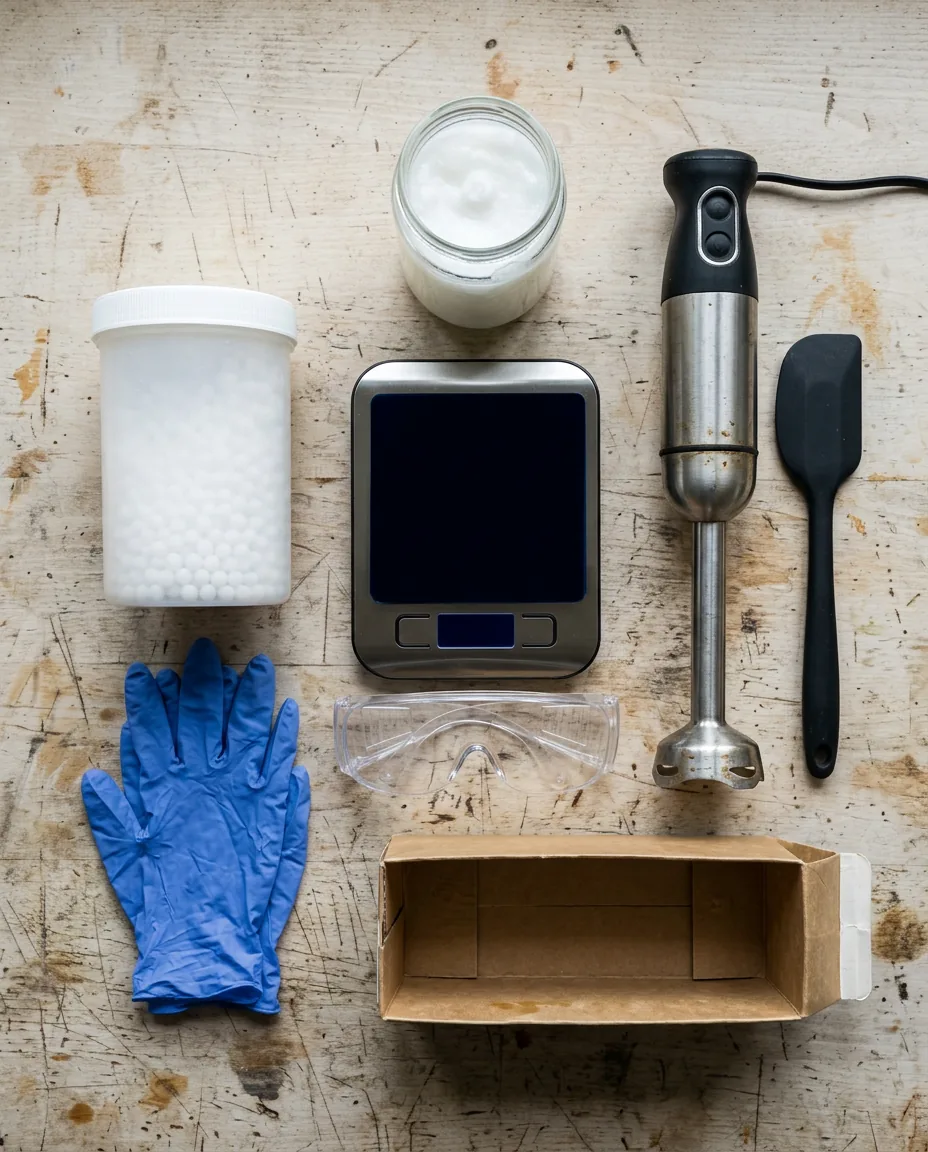
Weigh everything in grams, oils and water included, on a scale that resolves to 1 g or finer. Run the recipe through a lye calculator yourself before you mix, even a recipe you trust. For bars already made, press a wet strip of pH paper into the lather; anything above 10 means bin the batch. You can shred and rebatch with extra oil in theory, but you’d be guessing at how far over you went, and a guess is what put you here.
Pouring the water onto the lye
Bin it
What happens
Sodium hydroxide dumps its heat the instant it meets water. A 33% solution climbs from room temperature to somewhere near 90°C in well under a minute. Add lye to water and that heat spreads through the whole volume. Do it the other way and all of it lands in a thin film at the bottom of the jug, which flashes to steam and throws caustic solution back out. Upward, at whatever is leaning over the container.
Fix
Lye into water. Every time, with no exception worth arguing about. Weigh your water first and stand the jug in an empty sink, then spoon the beads in and stir as you go. If it has already erupted, don’t rescue what’s left in the jug. You no longer know how much lye is still in there and how much went across the counter. Flood the area with cold water and start again.
Holding the stick blender down until it seizes
Rebatch
What happens
Trace arrives after roughly 40 to 90 seconds of actual blending in most beginner recipes. Not five minutes. Beginners hold the trigger waiting for something obvious to happen, sail past light trace, and end up with batter too stiff to pour. Fragrance makes it worse. Spiced and floral oils can take a batch from pourable to solid in about ten seconds, with no warning stage in between.
Fix
Pulse for three seconds, then stir with the motor off for ten, and repeat. You want a drizzle that sits on the surface for a second or two before sinking back in. Stop there. If it’s already thick, glop it into the mould and press it down hard to force the air pockets out; you’ll get a rustic top and a perfectly good bar. If it won’t move at all, shred it and rebatch in a slow cooker on low.
Insulating a batch that was already hot
Save it
What happens
Saponification generates its own heat. Soap at 60°C, wrap the mould in towels, and you stack your heat on top of the reaction’s. The middle of the loaf goes past gel into a full overheat. It swells, splits along the top, and sets with a dark translucent ring through the centre where it ran hottest. Sometimes it pushes up out of the mould entirely.
Fix
Soap between 38°C and 43°C, and skip the towels unless your room is below about 18°C. Catch a crack while the top is still soft and you can press it back together with a gloved hand. Otherwise leave it. The split closes a little as the loaf firms, and you can plane the top flat before cutting. This one is cosmetic. The bar underneath is sound and rests out the same six weeks as any other.
Turning it out after twelve hours
Save it
What happens
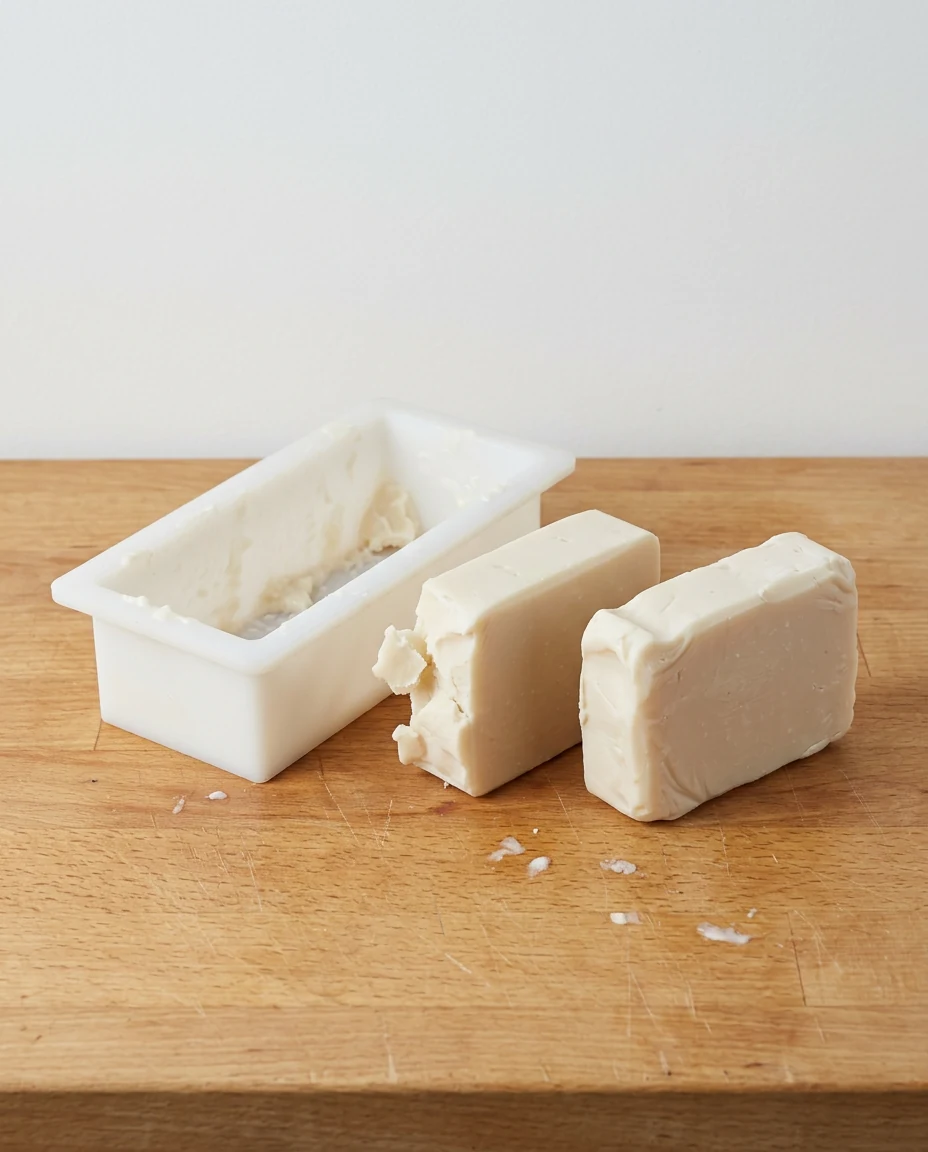
Most of the lye is spent within about 24 hours, but the bar is still soft and still full of water at that point. Push it out early and it dents under your thumbs, tears at the edges, and drags against the wire instead of cutting clean. Half the loaf ends up smeared back into the mould. Beginners unmould early because nothing appears to be happening, which is exactly what should be happening.
Fix
Leave it 24 to 48 hours in the mould, and closer to 72 for a high-olive recipe, which stays soft far longer than a coconut-heavy one. Cut when the loaf feels like firm cheese and holds a sharp corner under light pressure. If you’ve already mangled it, let the pieces sit a week on a rack and then true up the edges with a vegetable peeler.
Prevent it next time
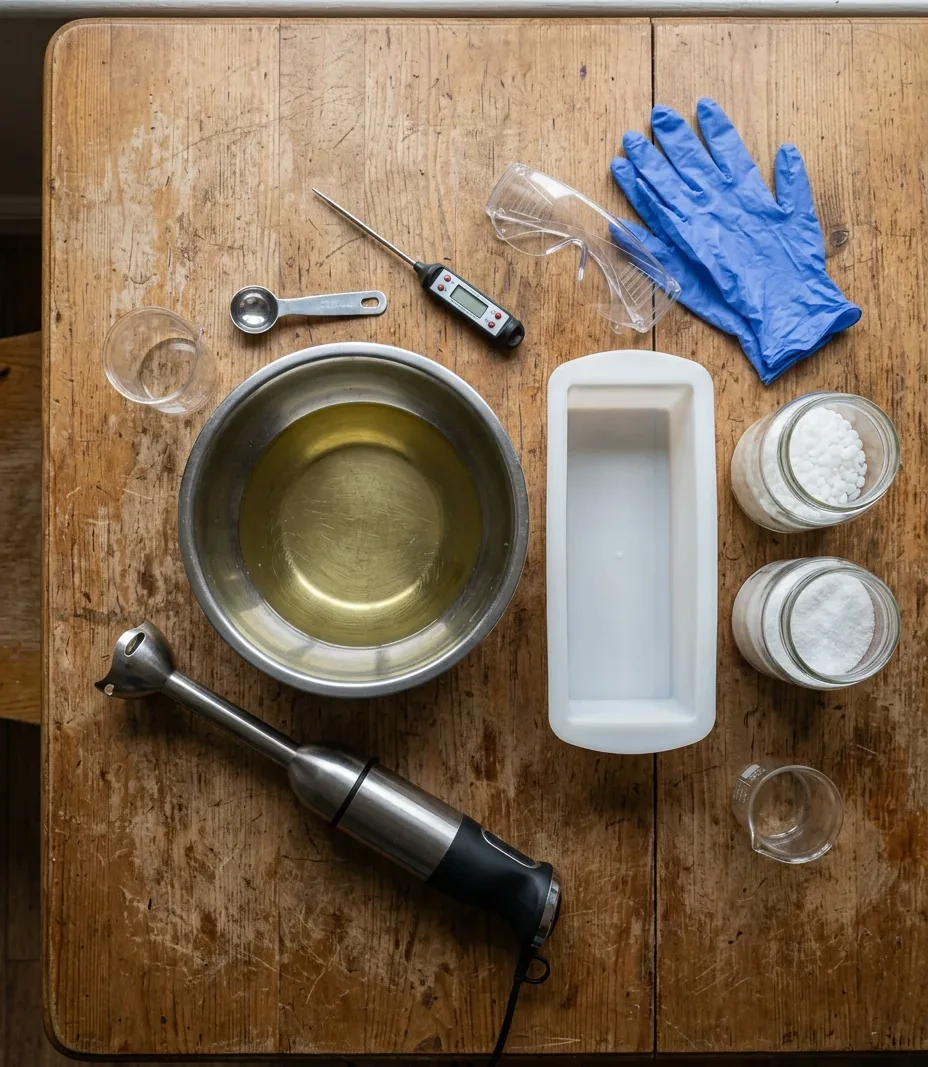
- Weigh in grams on a scale that reads to 1 g or finer. Nothing gets measured by volume, water included.
- Run every recipe through a lye calculator yourself before mixing, even one you’ve made ten times.
- Lye into water. Goggles and gloves on before the jar is opened, not after.
- Blend in three-second pulses with a ten-second stir between them, and stop at a trail that sits for two seconds.
- Soap at 38 to 43°C and leave the towels in the cupboard unless the room is genuinely cold.
- Twenty-four to 48 hours in the mould, then six weeks resting on a rack before the first bar goes near a sink.
Three of these five you can walk back. The two you can’t both come down to the same thing: what your ingredients actually weigh. A scale that resolves to 0.1 g costs about $20, which is less than the oils in one ruined batch. Buy that before you buy a mould or a single bottle of fragrance.