Where the colour actually goes wrong
Most melt and pour colour problems have nothing to do with the colorant itself. They come from timing, from temperature, or from an assumption about how the base will behave once it cools. Six mistakes account for nearly everything that goes wrong on a pour. Spot them early, and every batch after this one comes out the shade you actually planned — not the shade you ended up with.
Colour looks murky after it sets
Save it
What’s happening
Liquid colour goes into base that’s still close to 140°F. At that temperature the pigment doesn’t fully disperse — it sinks in threads, then gets trapped mid-swirl as the base cools around it. The result reads as murky rather than clear and saturated, even when the colorant itself is a good one. Adding too much at once makes this worse, not better; extra drops muddy a shade instead of deepening it.
Fix
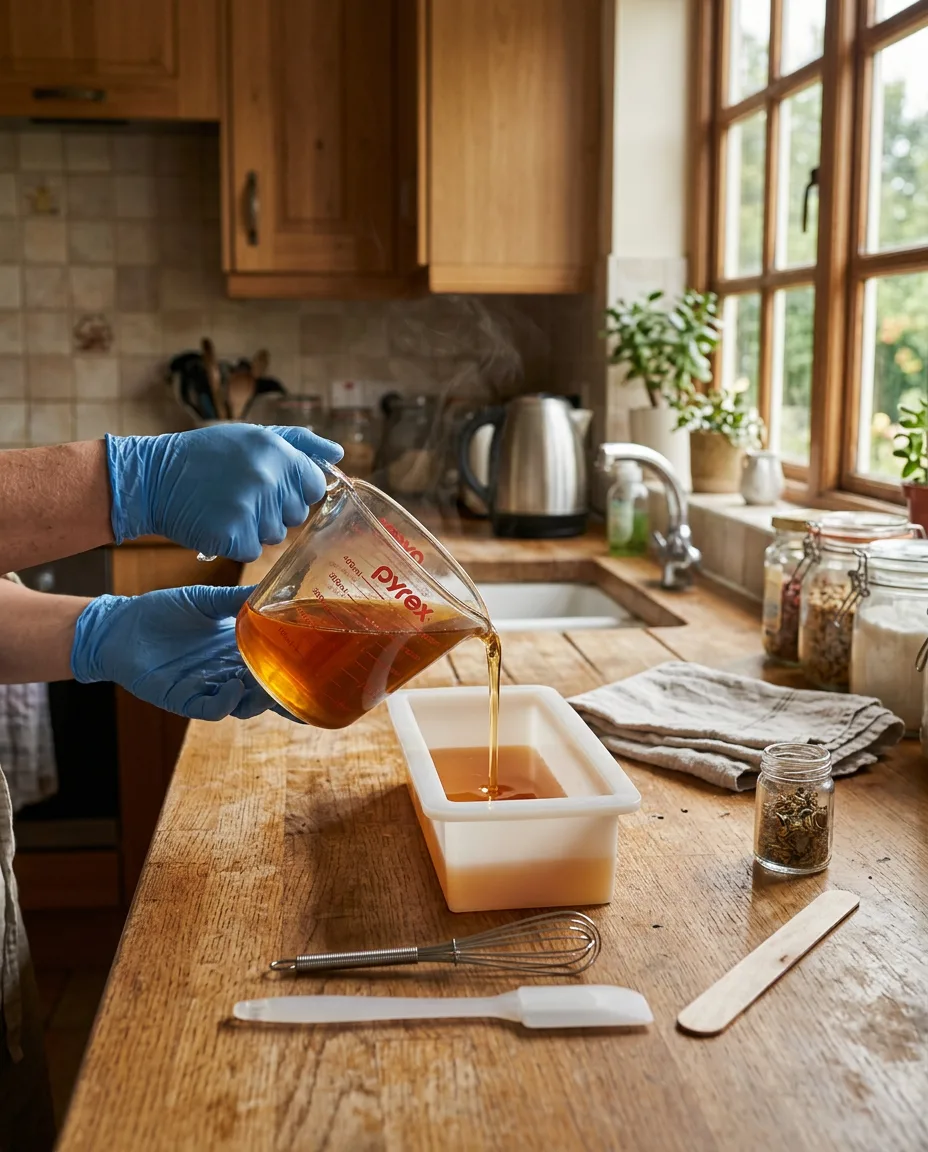
Let the base cool to 125–130°F before adding any colour. Add it in small increments — start with one or two drops per pound — and stir gently but thoroughly for a full minute before pouring. Patience here matters more than the colorant brand.
Colour fades or dulls within a week
Save it
What’s happening
Some colorants simply aren’t built to last in a clear or translucent base — there’s no opacity to hide the fade the way there is in cold process. Sunlight speeds this up considerably. Fragrance oils high in vanillin cause a separate problem: they push the whole bar toward amber over days or weeks, regardless of what colour went in.
Fix
Choose colorants labeled for cosmetic use — oxide and ultramarine pigments hold their tone far longer than most fruit or vegetable powders. Keep finished bars out of direct sun. If a fragrance is known to be vanillin-heavy, pick a colour that can absorb an amber drift — browns, oranges, terracottas — instead of fighting it with a pastel that will only look muddy in a month.
Mica streaks instead of blending evenly
Rebatch
What’s happening
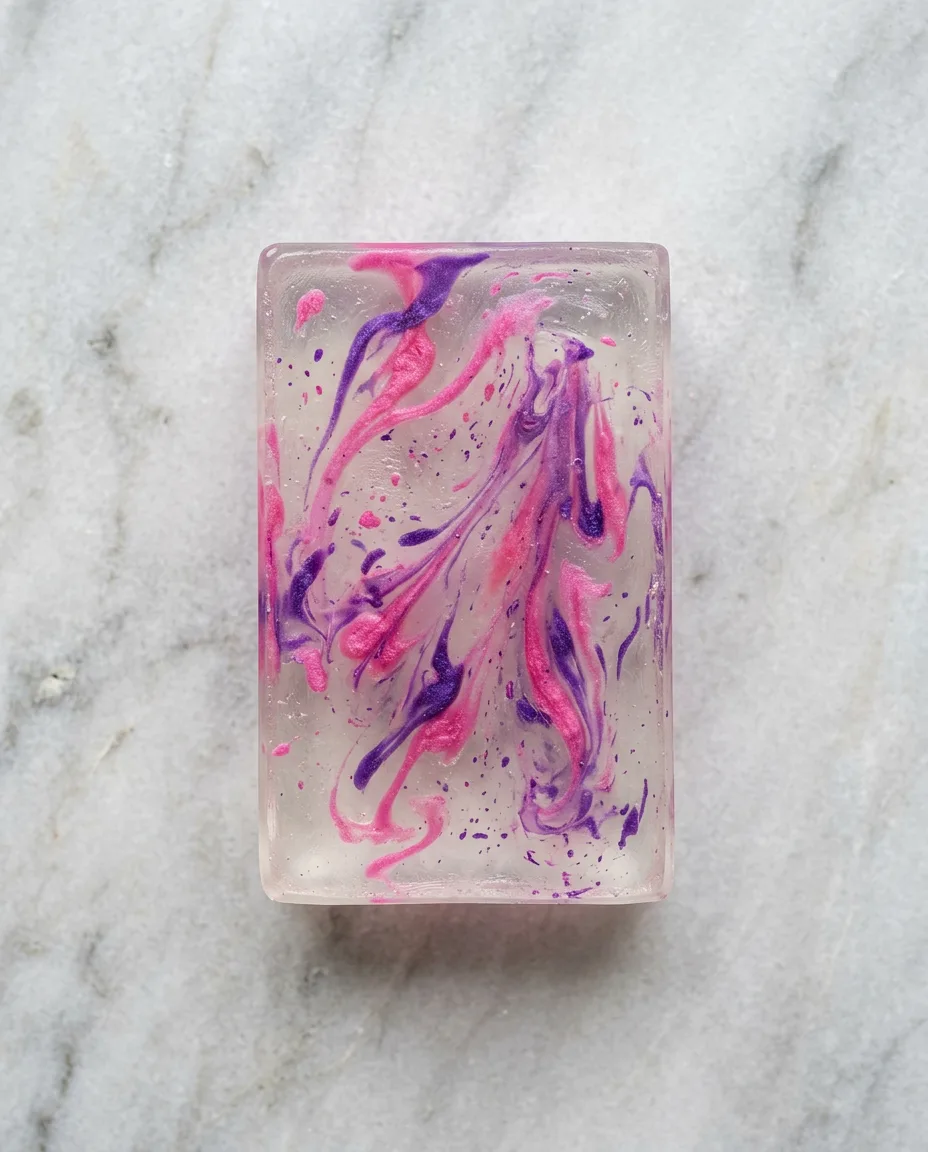
Mica powder dropped straight into liquid base clumps. It doesn’t dissolve — it drags streaks through the pour as it’s stirred, then sets exactly where it landed. Stirring harder to fix it usually just adds bubbles, which trap pigment unevenly and make the streaking worse.
Fix
Pre-mix the mica with a teaspoon of 99% isopropyl alcohol, or a small amount of light oil, into a smooth paste before it goes anywhere near the base. Stir gently for 30 to 45 seconds once combined, then pour from a slight height in one continuous stream — that breaks surface tension better than tipping the whole cup in at once.
The final shade is nothing like the bottle
Rebatch
What’s happening
Colour swatches on a bottle are almost always tested against a clear base. Plenty of bases aren’t clear — goat milk runs cream, honey runs amber — so the same drops land warmer and darker than expected once they sit on top of an existing tint. Overheated base compounds the problem: a base that’s already gone slightly gold before colour is added shifts the final shade a second time.
Fix
Test any new colour in a one-ounce sample of the base you’re actually using, not the swatch card. It takes two minutes and tells you more than any label will.
Base turns yellow before colour even goes in
Save it
What’s happening
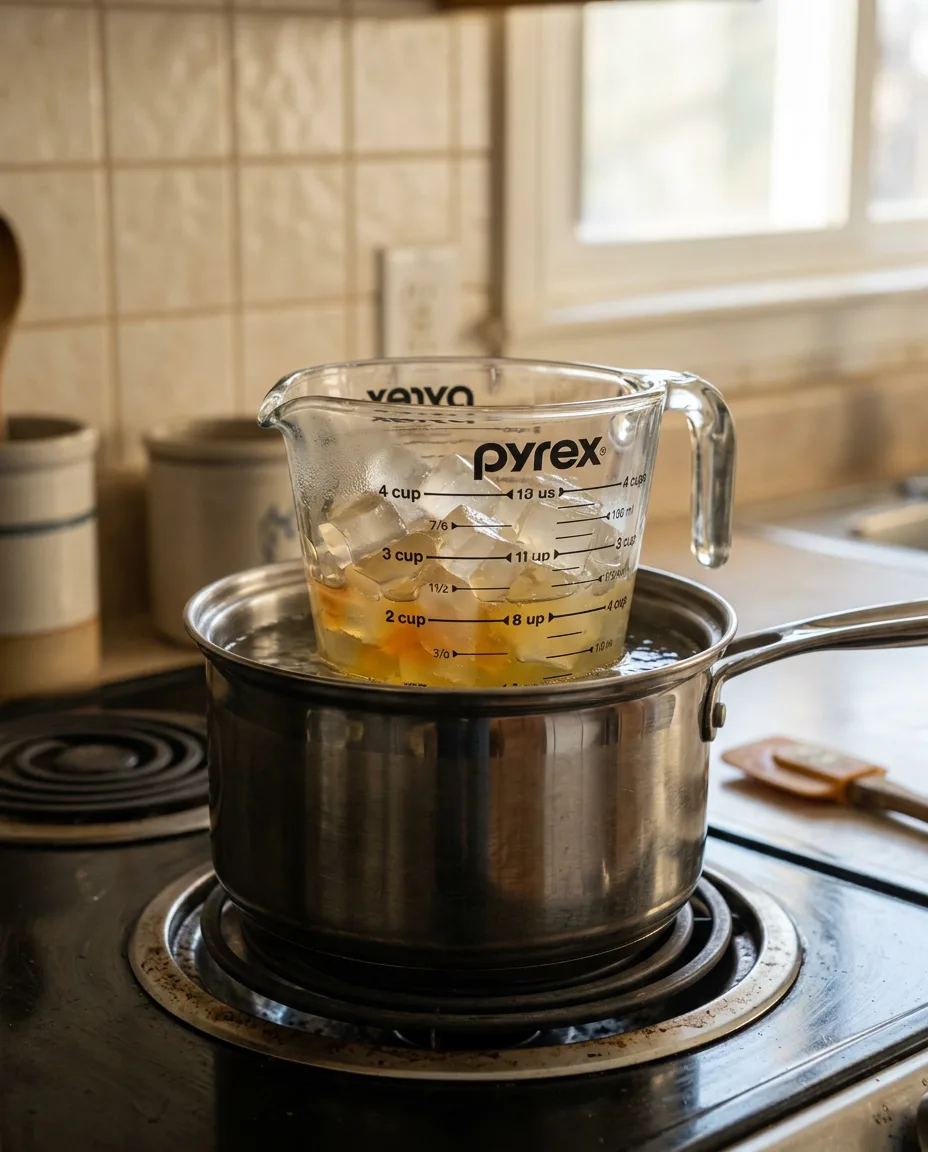
Overheating — long microwave bursts, or a double boiler left at a rolling simmer too long — starts to caramelize the glycerin in the base and oxidize it. Once a block looks even faintly golden next to a fresh one, that shift is already locked in. No amount of white colorant fully masks it.
Fix
Melt in 20 to 30 second microwave bursts, stirring between each, or keep double boiler water at a bare simmer rather than a boil. If a batch does yellow slightly, don’t fight it — lean into warm colours that were going to read amber-adjacent anyway.
One bad guess ruins the whole batch
Bin it
What’s happening
An unfamiliar colorant, a new base, or a ratio copied from someone else’s recipe — poured straight into the full mold without a trial run. When it’s wrong, it’s wrong across the entire batch, not just one bar. This is the mistake that makes the other five expensive instead of just annoying.
Fix
Pour a one-ounce test cup before the full batch, every time a new colour, new base, or new ratio is involved. It costs about two minutes and an ounce of base. It’s the single habit that keeps the other five mistakes from reaching a finished bar at all.
Prevent it next time
- Cool base to 125–130°F before adding any colorant
- Pre-disperse mica in alcohol or oil before it touches the base
- Test every new colour in a one-ounce sample of the actual base first
- Keep melting temperature under 170°F to avoid pre-yellowing
- Store finished bars out of direct sunlight
- Pour a test cup before every full batch with a new variable in it